Why Choosing the Right Pay Per Click Companies Can Transform Your Business
Pay per click companies help businesses get immediate, measurable traffic by managing paid ads on platforms like Google, Meta, LinkedIn, and more.
Here are the top factors to look for when comparing PPC companies:
- Verified client reviews — Look for agencies with a high percentage of 5-star ratings
- Platform certifications — Google Premier Partner, Meta Business Partner, etc.
- Transparent reporting — Real-time dashboards and regular strategy calls
- Industry experience — Proven results in your specific niche or market
- Flexible pricing — Month-to-month options without long-term lock-in
- Full-funnel services — Ad management plus landing page and conversion optimization
Paid advertising is one of the fastest ways to reach customers who are ready to buy. But running a profitable campaign takes more than just setting a budget and choosing some keywords. It requires constant testing, smart bidding, tight audience targeting, and disciplined measurement.
For small businesses in South Florida — where competition is fierce and marketing budgets are tight — picking the wrong PPC partner can mean wasted spend with little to show for it. The right agency, on the other hand, can turn every dollar into a measurable return.
Businesses typically see $2 in revenue for every $1 spent on Google Ads — but only when campaigns are managed with real expertise and strategy behind them.
I’m Fernando Larez, a marketing professional and business leader based in Hollywood, Florida, with hands-on experience running pay per click companies and paid search campaigns across multiple industries. In this guide, I’ll walk you through everything you need to know to find, evaluate, and partner with the right PPC agency for your business goals.
What are Pay Per Click Companies and How Do They Work?
At the simplest level, pay per click companies are agencies or specialists that manage paid advertising campaigns where advertisers pay when someone clicks an ad.
That sounds simple. In practice, it is delightfully messy.
A PPC agency usually handles:
- Keyword research
- Campaign setup
- Ad copy creation
- Bid strategy
- audience targeting
- Landing page recommendations
- Conversion tracking
- Ongoing optimization
- Reporting and ROI analysis
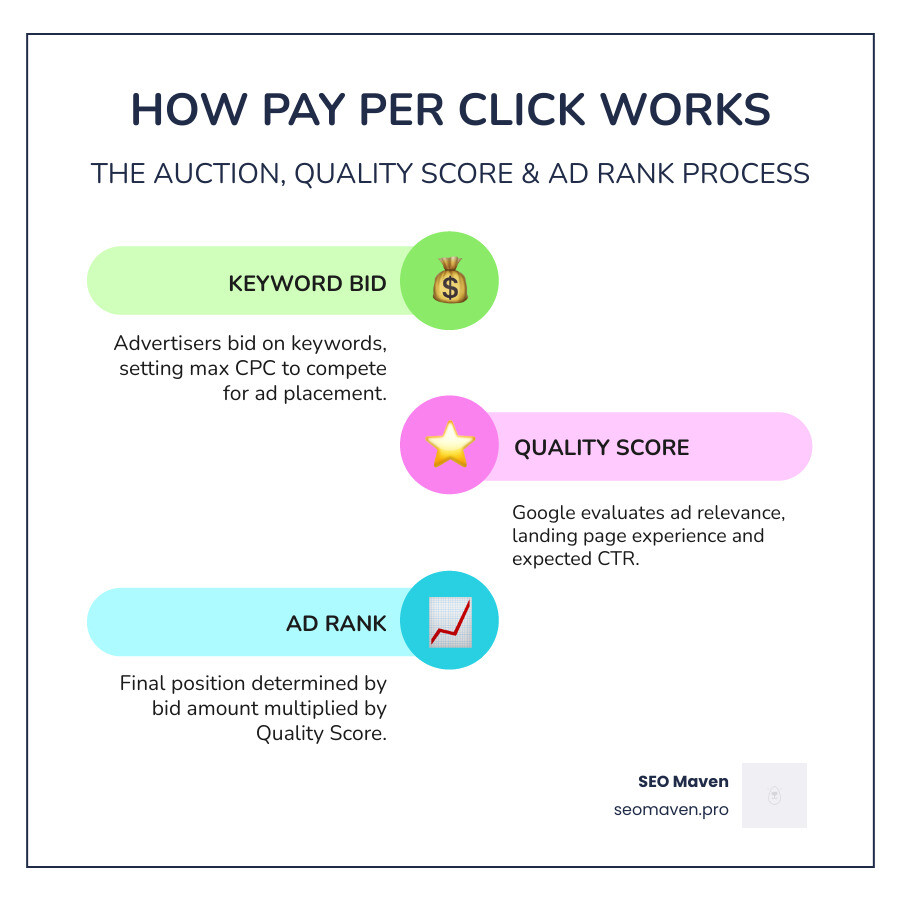
Most PPC campaigns run through an ad auction. When someone searches on Google or Microsoft, the platform decides which sponsored ads appear and in what order. That decision is not based only on who bids the most. It also depends on ad relevance, expected click-through rate, and landing page experience. On Google, this is closely tied to Quality Score.
In other words, the winner is not always the one with the fattest wallet. Sometimes it is the one with the better strategy. We like that.
A strong PPC company works to improve:
- Ad rank
- Click-through rate
- Conversion rate
- Cost per click
- Cost per acquisition
- Return on ad spend
If you are new to PPC, think of it this way: the platform sells attention, and your agency helps you buy the right attention at the right price.
Ads can appear in:
- Search engine results
- Shopping results
- YouTube
- Display networks
- Maps and local placements
- Social feeds
- Remarketing placements
For a deeper primer on why businesses use paid ads in the first place, read Why Your Business Needs a PPC Ad Company to Survive the Internet.
Key Benefits of Partnering with Top Pay Per Click Companies
The biggest reason businesses hire PPC experts is speed. SEO is powerful, but PPC can put you in front of buyers today, not six months from now.
Here are the main benefits.
1. Immediate visibility
A good campaign can start generating traffic as soon as it goes live. That is especially useful for local businesses in Hollywood, Fort Lauderdale, Miami, Aventura, and broader South Florida markets where competition moves fast.
2. Access to ready-to-buy customers
PPC works especially well when someone is actively searching with commercial intent. Searches like “emergency plumber near me” or “best family lawyer Miami” are not casual browsing. They are high-intent moments.
3. Precise targeting
Top agencies can target by:
- Keywords
- Zip code or city
- Device
- Time of day
- Audience segment
- Past site visitors
- Job title or company type on some platforms
That precision helps reduce waste and improve lead quality.
4. Measurable ROI
One of PPC’s biggest advantages is trackability. With the right setup, you can measure:
- Calls
- Form fills
- Purchases
- Booked appointments
- Revenue
- Cost per lead
- ROAS
Good PPC agencies do not stop at clicks. They connect ad performance to real business outcomes.
5. Faster testing
PPC gives you fast feedback on:
- Which offers work
- Which keywords convert
- Which locations perform best
- Which landing pages win
- Which audiences are worth scaling
That data can even make your SEO smarter over time.
6. Competitive advantage
Paid search lets smaller businesses compete for high-value searches even when larger brands dominate organically. With the right message and landing page, a smaller company can absolutely punch above its weight.
7. Better lead generation and remarketing
Research shows remarketing can deliver significantly stronger returns than cold traffic campaigns. That matters because most users do not convert on the first visit. PPC lets you bring them back before they forget you exist and marry a competitor.
How to Choose the Right PPC Agency for Your Business
Choosing a PPC partner is part strategy, part risk management, and part detective work.
Start with this guide: How to Pick a PPC Advertising Company That Actually Delivers.
Then evaluate agencies using these filters.
1. Look for verified reviews, not just flashy claims
Reviews are one of the clearest signals of consistency. The research shows some well-known agencies earn very high percentages of 5-star PPC reviews, while others stand out for responsiveness, communication, and cost efficiency. That does not mean every highly rated agency is right for you, but it does mean verified feedback matters.
Pay attention to recurring themes like:
- Strong communication
- Strategic thinking
- Better lead quality
- Reduced wasted spend
- Reliable reporting
- Timely delivery
2. Check industry expertise
A B2B SaaS account is different from a med spa account. Ecommerce is different from legal services. Local lead generation is different from Amazon advertising.
Ask whether the agency has experience with your business model, sales cycle, and average customer value.
Industries that often benefit most from PPC include:
- Home services
- Legal
- Healthcare
- Ecommerce
- Automotive
- Real estate
- B2B services
- Local professional services
3. Ask about platform specialization
Not every PPC company is equally strong across every channel. Some are excellent with Google Ads and Microsoft Ads. Others are better at paid social, shopping ads, or Amazon.
If your needs are local and service-based, search-focused expertise may matter most. If you sell products, shopping and feed optimization become much more important.
4. Review reporting and transparency
Transparency is not optional. It is the whole game.
You should know:
- Where the money goes
- What changed this month
- What is improving
- What is not working
- What the next tests are
- How leads and sales are being tracked
The best agencies usually provide dashboards, regular meetings, and plain-English reporting. No smoke. No mirrors. No “trust us, the impressions were fantastic.”
5. Evaluate strategic fit
A good PPC agency should align with your goals, not force you into a generic package.
Ask whether they optimize for:
- Revenue
- Qualified leads
- Pipeline
- booked calls
- ROAS
- CPA targets
- Local market growth
If they talk only about clicks and traffic, keep interviewing.
6. Review their portfolio and process
You want to understand how they work, not just what they promise.
A healthy process usually includes:
- Account audit
- Competitive review
- Tracking review
- Strategy build
- Launch or restructure
- Testing plan
- Ongoing optimization
- Reporting and iteration
If you want to compare agencies by geography, these directories can help:
- Top PPC Agencies in Fort Lauderdale – Apr 2026 Rankings | Clutch.co
- Top PPC Agencies in Miami – May 2026 Rankings | Clutch.co
- Best PPC Agencies in Miami 2026 | Semrush
- Best B2B Services PPC Agencies in Aventura 2026 | Semrush
- Top PPC Agencies in Florida – May 2026 Rankings | Clutch.co
- Best PPC Agencies in United States 2026 | Semrush
- Hollywood, FL PPC Marketing: Google Ads Management, Pay Per …
Services and Platforms Offered by Leading Agencies

The best PPC partners do more than just launch ads. They manage the entire path from click to conversion.
Core Services of Pay Per Click Companies
Most leading agencies offer some mix of the following:
- Google Ads management
- Microsoft Ads management
- Meta Ads management
- LinkedIn Ads management
- YouTube Ads
- Amazon Ads
- TikTok Ads
- Keyword research
- Competitor analysis
- Campaign creation
- Ad copywriting
- Bid management
- Negative keyword management
- Conversion tracking
- A/B testing
- Landing page optimization
- Remarketing
- Performance reporting
Google Ads remains the biggest PPC platform for most businesses, especially for high-intent search. Common campaign types include:
- Search
- Display
- Shopping
- Video
- App
- Performance Max
If you serve a local market, Guide to Google Local Service Ads is worth reviewing too.
Specialized Solutions for Pay Per Click Companies
Beyond the basics, stronger agencies often offer specialized solutions for specific business types.
eCommerce PPC
Usually includes:
- Shopping campaigns
- Product feed optimization
- Performance Max
- Catalog ads
- Dynamic remarketing
- Marketplace ad support
B2B lead generation
Usually includes:
- Search intent targeting
- LinkedIn audience targeting
- CRM integration
- Offline conversion tracking
- Pipeline and lead quality reporting
Local service advertising
Especially valuable for South Florida businesses that depend on calls, appointments, and map visibility. Strong local PPC setups often combine search campaigns, call tracking, geo-targeting, and local landing pages.
Display and remarketing
Used to stay in front of previous visitors and move them back into the funnel.
App promotion and video ads
Useful when the goal is installs, awareness, or YouTube-driven demand generation.
Measuring ROI and Understanding PPC Costs in 2026
The research shows PPC agencies commonly use one of three pricing models:
| Pricing model | How it works | Best for | Watchouts |
|---|---|---|---|
| Flat fee | Fixed monthly management cost | Stable budgets and clear scope | Can under-serve larger, complex accounts |
| Percentage of spend | Fee scales with ad budget | Growing campaigns with active optimization | Incentives can drift toward more spend, not always more profit |
| Performance-based | Compensation tied to results | Businesses with strong tracking and aligned goals | Requires very clear definitions and attribution |
We are not listing specific prices here, but the market data is clear: agency costs vary widely depending on scope, ad spend, platform mix, and whether landing pages, creative, or CRO are included.
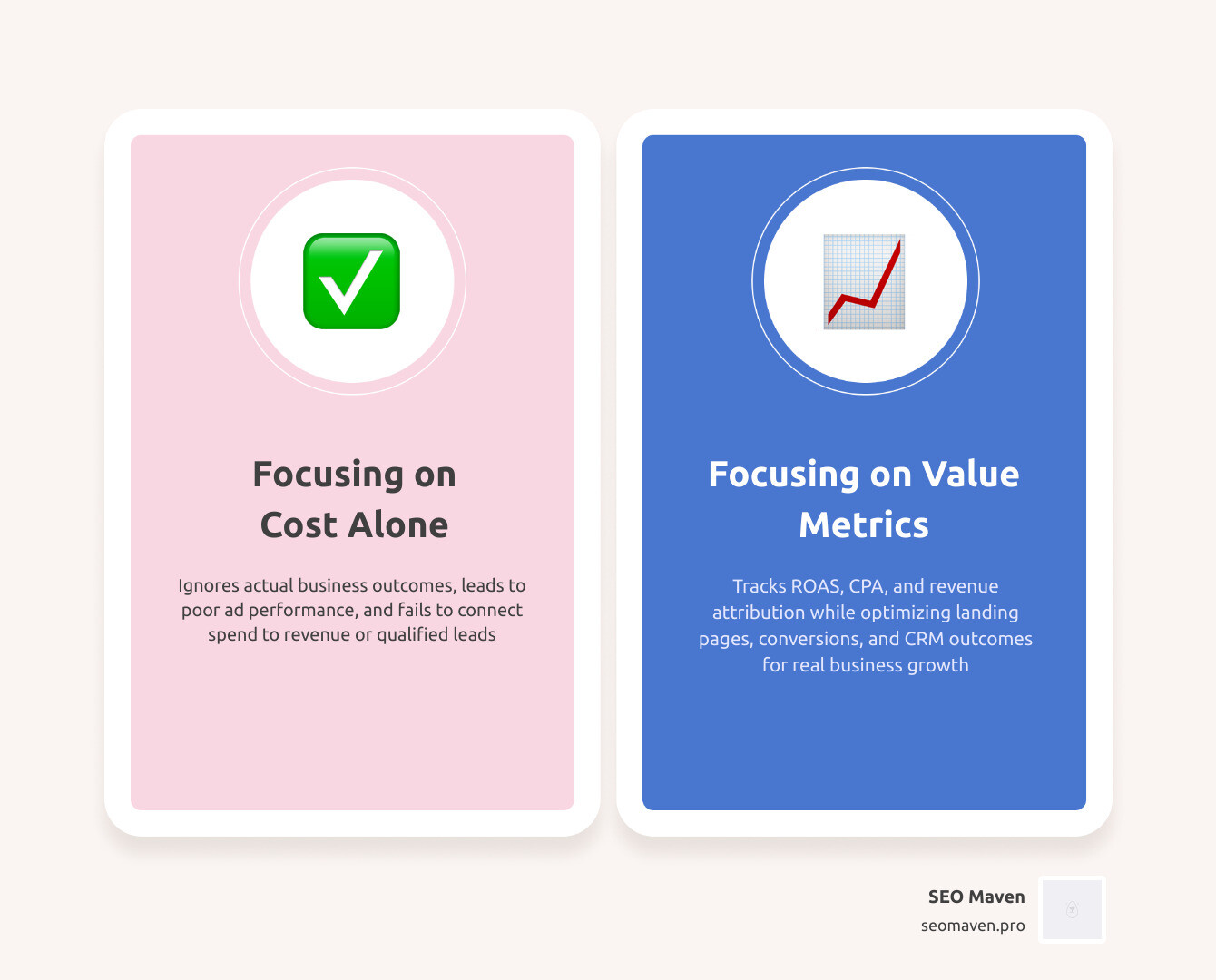
That is why cost alone is a bad comparison metric.
Instead, focus on how the agency measures value.
The most important PPC ROI metrics
- ROAS: revenue divided by ad spend
- CPA: cost per acquisition or lead
- Conversion rate
- Cost per click
- Click-through rate
- Qualified lead rate
- Pipeline contribution
- Customer acquisition cost
- Revenue attribution
What top agencies do differently
The strongest agencies usually:
- Set up conversion tracking before scaling
- Import offline conversions where possible
- Use call tracking for lead-gen accounts
- Connect CRM outcomes back to campaigns
- Separate vanity metrics from business metrics
- Optimize landing pages, not just ads
That last point matters a lot. If your landing page is weak, even the best ad account will struggle. Many top-performing providers now combine PPC with CRO because message match, page speed, mobile usability, and form friction all affect results.
What to ask before signing
- How do you define a conversion?
- Can you track calls and form fills?
- Do you report on qualified leads or just raw leads?
- How often do you optimize?
- Who owns the ad account and data?
- What does your reporting include?
- How do you handle attribution?
If the answers are vague, the future reporting probably will be too.
Latest Trends and Optimization Strategies for 2026
PPC in 2026 is more automated, more data-heavy, and more interconnected with the rest of digital marketing than ever.
AI automation and machine learning bidding
Platforms now rely heavily on automated bidding and predictive signals. That can improve efficiency, but only if tracking is clean and campaign structure is sound. Automation is powerful. Bad inputs still produce bad outputs, just faster.
First-party data matters more
As privacy restrictions continue to shape advertising, businesses need better first-party data through:
- CRM systems
- Email lists
- Call tracking
- Purchase data
- Lead qualification data
Agencies that can use real customer data tend to make better optimization decisions.
Performance Max and cross-channel campaigns
Performance Max continues to be a major part of Google Ads in 2026, helping advertisers appear across Search, Display, YouTube, Discover, and more through one campaign type. It can work very well, but it requires strong creative assets, tracking, and audience signals.
Landing page optimization is no longer optional
Research repeatedly points to the same truth: better landing pages improve conversion rates and lower cost per conversion. Top agencies test headlines, offers, forms, layouts, trust elements, and mobile performance alongside the ads themselves.
LLM visibility and AI search behavior
Search behavior is shifting. People increasingly discover brands through AI summaries, chat tools, and hybrid search experiences. While PPC still runs mainly through traditional ad platforms, campaign messaging and keyword strategy now need to reflect more conversational, intent-rich queries.
That does not replace search ads. It changes how we think about demand capture.
More integrated marketing
The best results often come when PPC works alongside SEO, content, and broader digital strategy. Paid campaigns can reveal which keywords convert now, while SEO builds long-term equity around those same topics.
If you want help beyond PPC alone, see our Marketing Services.
Frequently Asked Questions about PPC Providers
How long does it take to see results from a PPC campaign?
Traffic can begin immediately after launch. Meaningful optimization usually takes a bit longer.
A common pattern looks like this:
- Days 1-7: campaign launches and early data collection
- Weeks 2-4: initial optimization on bids, search terms, ads, and landing pages
- Month 2 and beyond: scaling winners and cutting waste
If an account already exists and has obvious issues, improvements can happen very quickly. But stable, efficient growth usually requires a few weeks of disciplined testing.
Is PPC advertising suitable for small businesses with limited budgets?
Yes, if the campaign is tightly focused.
PPC is highly scalable. Small businesses can control spend through:
- Daily budgets
- Geographic targeting
- Niche keyword selection
- Ad scheduling
- Device targeting
- Carefully chosen services or products
For local businesses in South Florida, this can be especially effective because you do not need to target everyone. You need to target the right people in the right service area.
What is the difference between PPC and SEO?
PPC is paid visibility. SEO is organic visibility.
PPC gives you:
- Immediate traffic
- Faster testing
- Budget control
- Precise targeting
SEO gives you:
- Long-term compounding traffic
- Greater trust over time
- No cost per click
- Stronger content equity
The smartest strategy is often both. PPC captures demand now while SEO builds demand over time. Together, they can improve overall acquisition efficiency and help you dominate more of the search results.
Conclusion
Choosing among pay per click companies is not about finding the loudest agency or the prettiest dashboard. It is about finding a partner that understands your market, tracks the right outcomes, communicates clearly, and improves results over time.
For businesses in Hollywood, Fort Lauderdale, Miami, Aventura, and across South Florida, the best PPC partnerships are built on:
- Clean measurement
- Transparent reporting
- Smart testing
- Strong landing pages
- Real business alignment
At SEO Maven, we take a boutique approach to digital marketing because small businesses usually do better with focus than fluff. We help companies grow through practical strategy, clear communication, and ROI-minded execution across SEO, content, web design, consulting, and broader digital campaigns.
If you want a smarter plan for paid and organic growth, Contact our specialists for a custom marketing plan.