What Is an SEO Press Release (and Why It Matters for Your Business)?
An seo press release is an official news announcement written to be discovered by both journalists and search engines — giving your business two chances to get noticed with a single piece of content.
Here’s a quick overview of what you need to know:
- What it is: A press release optimized with keywords, structured formatting, and links so it ranks in Google and gets picked up by media outlets
- Who it’s for: Businesses wanting more online visibility, brand authority, and referral traffic
- How it helps SEO: Builds brand mentions, earns media coverage, improves entity recognition, and drives referral traffic — even without direct link equity
- Key difference from a traditional press release: Goes beyond media outreach to also target search engines and AI platforms like Google AI Overviews and ChatGPT
- Does it still work in 2026? Yes — when done right, focused on real news, proper structure, and strategic distribution
Think of it this way: a traditional press release is written for a journalist. An SEO press release is written for a journalist and for Google — and increasingly, for AI tools that millions of people use to research brands before buying.
For a small business struggling to get organic traffic, that’s a meaningful opportunity.
The landscape has shifted significantly. Google stopped treating press release links as direct ranking signals back in 2013. But that doesn’t mean press releases are useless for SEO — far from it. When done correctly, they build brand authority, earn real editorial backlinks, and even get cited by AI platforms like Perplexity and ChatGPT long after they’re published.
I’m Fernando Larez, a marketing professional with hands-on experience in SEO, digital PR, and brand strategy — including crafting and distributing seo press releases that build visibility and generate qualified leads across competitive markets. In this guide, I’ll walk you through everything you need to turn a simple company announcement into a search-optimized asset that works for your business.
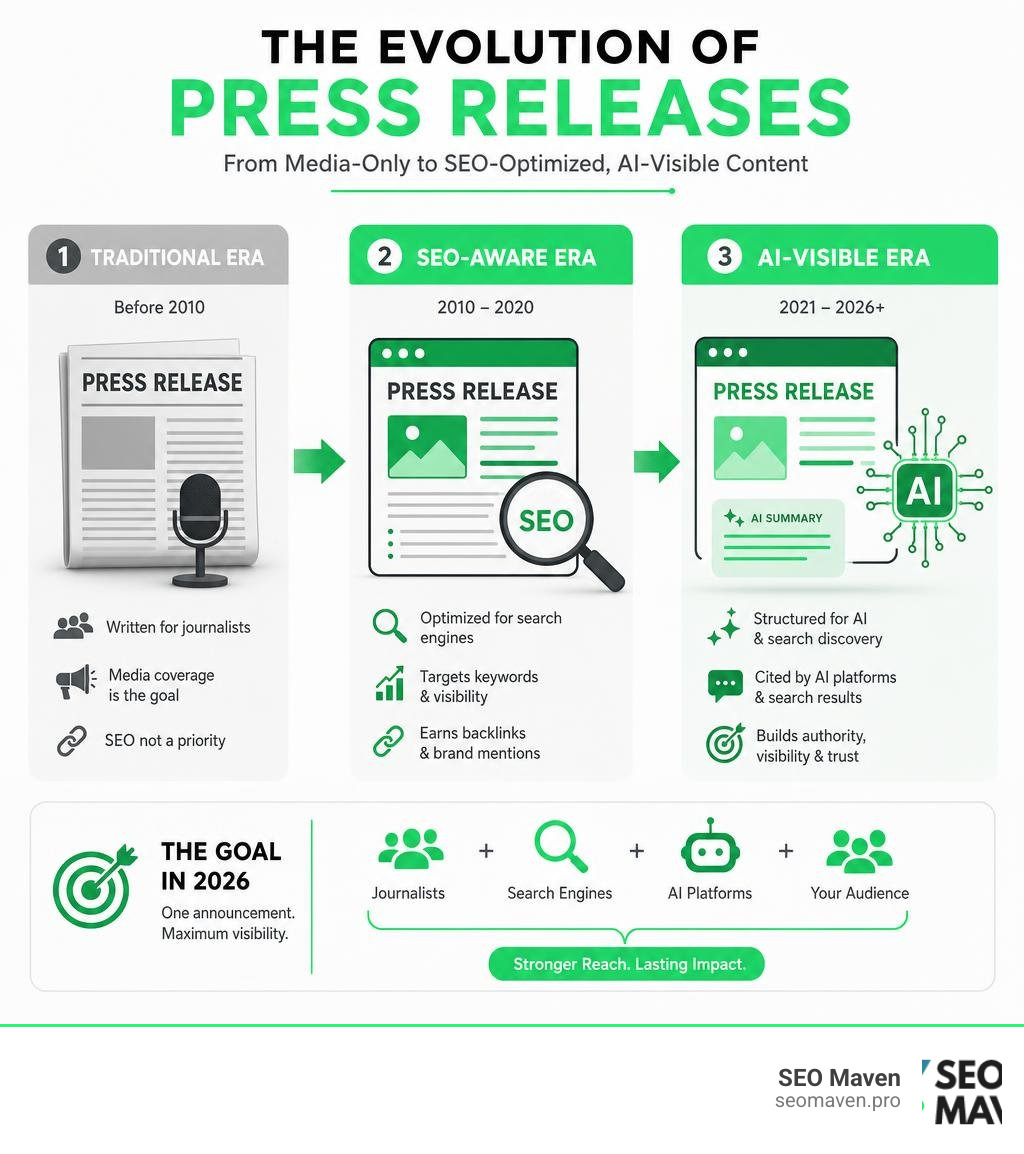
What is an SEO Press Release and How Does It Work in 2026?
For years, public relations and search engine optimization lived in separate silos. PR pros focused on media pickup, while SEO specialists obsessed over search engines and technical ranking factors.
But as search engines have evolved, those worlds have merged. Today, Google uses sophisticated systems to understand brand mentions and entity authority. This means that even if a news site publishes your release with “nofollow” links, Google still recognizes your brand as an active, trustworthy entity.
When we optimize a press release for search, we are not trying to “trick” the algorithm with keyword-stuffed copy. Instead, we are helping search engines understand the context of our news. By using strategic keywords and formatting, we make it easier for Google to index our announcement and display it to users searching for related topics. To better understand how search engines evaluate authority, you can read more on the Search Engine Journal: The Guide to SEO Press Releases.
Traditional PR vs. SEO Press Release
To understand why an seo press release is so powerful, we need to look at how it differs from a traditional release.
Traditional PR has one main goal: getting a journalist to write a story about your business. If a reporter doesn’t pick it up, the release is often considered a failure.
An optimized press release, however, is a dual-purpose asset. It still targets journalists, but it is also built to capture organic search intent. By publishing the release on your own website and distributing it through indexable channels, you create a permanent, crawlable page that can rank for specific, long-tail search queries.
| Feature | Traditional Press Release | SEO Press Release |
|---|---|---|
| Primary Audience | Journalists and editors | Journalists, search engine crawlers, and AI engines |
| Distribution Focus | Direct pitching and wire syndication | Crawlable online distribution and on-site newsrooms |
| Success Metric | Media pickup and coverage | Search rankings, referral traffic, and brand mentions |
| Keyword Strategy | None (focused purely on corporate messaging) | Natural integration of primary and secondary search terms |
| Link Strategy | Plain text or basic homepage links | Strategic, safe linking to relevant landing pages |
The Role of AI and LLMs in Modern PR
We cannot talk about search in 2026 without talking about Artificial Intelligence. Platforms like ChatGPT, Perplexity, and Google’s AI Overviews have completely changed how people find information. These Large Language Models (LLMs) do not just index keywords; they crawl the web to extract facts, entities, and citations.
This has major implications for PR. When you distribute a well-structured press release, you are feeding the databases that these AI systems rely on. If a user asks ChatGPT for the “best new digital marketing services in South Florida,” the AI is highly likely to pull facts from recent, authoritative press releases.
To make your content easy for AI engines to read and cite, you must write with clear, direct statements. Avoid vague corporate jargon and focus on high-density information. For a deeper dive into how search technology has adjusted to these models, check out Search Engine Land: How AI and LLMs Impact Search.
By ensuring your announcements are structured for both humans and machines, you can significantly improve your brand’s visibility in generative search results.
Do Press Releases Still Help SEO?
We hear this question all the time from business owners in Miami FL and Fort Lauderdale FL: “Do press releases actually help my website rank?”
The short answer is yes, but not in the way they used to.
Years ago, marketers would blast out low-quality press releases stuffed with exact-match anchor text links to manipulate Google’s PageRank. Google quickly caught on and updated its algorithms. Today, links inside distributed press releases are almost always “nofollow” or “sponsored” by default, meaning they do not pass direct link equity.
However, press releases remain incredibly valuable for indirect SEO, brand protection, and referral traffic. Let’s look at the real value they deliver today, as highlighted in the industry overview on Do Press Releases Help SEO? Benefits & Best Practices.
Direct vs. Indirect SEO Benefits
While you won’t get a massive boost in direct domain authority from a syndicated link, the indirect benefits of an seo press release are substantial:
- Referral Traffic: A release picked up by a high-traffic news site can drive hundreds of interested visitors directly to your website.
- Earned Backlinks: If a journalist reads your release and decides to write an original article about your business, they will often link back to you with a natural, high-authority “dofollow” link. This is where the real SEO magic happens.
- Brand Protection: When someone searches for your company name, you want to control the narrative. Having optimized press releases rank on the first page of Google helps push down any negative search results or irrelevant content.
To understand how these pieces fit into a broader organic growth campaign, you can explore How an SEO Agency Can Help You Rank.
Building Entity Trust and Knowledge Graph Signals
Google’s search engine is no longer just a directory of keywords; it is an entity engine. It wants to understand the relationship between people, places, and brands.
When you publish press releases consistently, you create a digital paper trail of citations. Even if these citations do not include a link, the mere mention of your brand name alongside your industry, address, and key executives helps Google build an “entity profile” for your business.
This citation density is incredibly important for triggering Google Knowledge Panels and establishing topical authority. The more trusted sources that mention your brand, the more Google trusts your website as a legitimate authority in your space. For official guidelines on how Google handles entity trust, see Google Search Central: Build Entity Trust.
How to Write and Format an Optimized Press Release
Writing an seo press release requires a careful balance. You must satisfy the search engine’s need for keywords and structure while keeping the content engaging and professional enough for a busy journalist.
The best way to achieve this is by using the classic inverted pyramid structure. This means placing the most important information at the very top of the release and following it with supporting details, quotes, and background information.
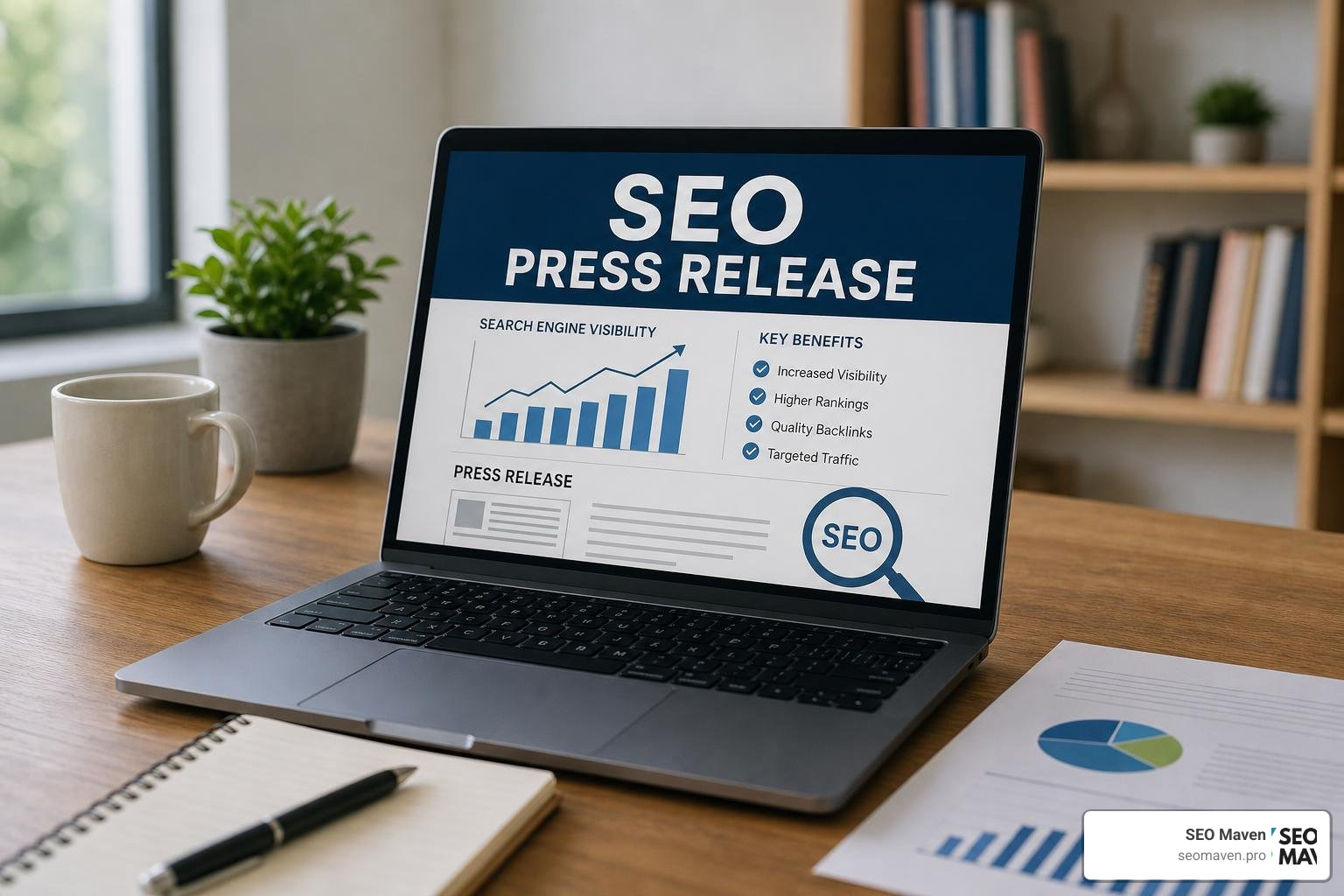
To master this layout and ensure your news gets noticed, check out our step-by-step guide on How to Master Press Release Format in 30 Days.
Crafting a Headline for an SEO Press Release
Your headline is the most important part of your press release. It needs to grab attention, convey the core news, and include your primary keyword — all while staying under tight character limits.
For search engine optimization, aim to keep your headline between 60 and 80 characters (or under 95 characters at the absolute maximum). If your headline is too long, search engines will cut it off in the search results.
- Weak headline: Company Announces New and Exciting Digital Marketing Solutions for Local Businesses (Vague, lacks keywords, and uses empty adjectives).
- Strong headline: SEO Maven Launches AI-Driven Search Optimization Services in South Florida (Clear, uses strong news verbs, identifies the brand, and naturally integrates geographic and industry keywords).
For more tips on writing headlines that perform well in search, visit Search Engine Journal: Crafting Optimized Headlines.
Structuring the Lead Paragraph and Body
Your lead paragraph must answer the classic 5 Ws: Who, What, Where, When, and Why.
Search engines and AI citation engines heavily weight the first 200 characters of your body text. If you don’t state your main point immediately, you risk losing both human readers and search crawlers. Keep your opening paragraph concise — around 25 to 30 words is ideal.
In the body of the release, focus on maintaining high information density. We recommend including at least one or two high-quality quotes from key company figures. However, avoid “quote-shaped padding” — quotes like “We are so excited about this launch” add zero value. Instead, use quotes to share specific data points or unique insights. Aim for at least one citable, attributable fact per 100 words of body copy.
Technical Optimization: Schema, Links, and Multimedia
Once your copy is written, you need to optimize the technical elements of the page:
- Schema Markup: If you are hosting the press release on your own website, always apply
NewsArticleorPressReleasestructured data. This helps Google identify the content as an official news announcement, increasing your chances of appearing in Google News and Discover. Learn how to implement this structured data at Google Search Central: NewsArticle Schema Markup. - Smart Linking: Limit your release to 1 to 2 links. Use branded or descriptive anchor text (like “SEO Maven”) instead of exact-match keywords (like “best Miami SEO agency”). Ensure your links are qualified with
rel="nofollow"orrel="sponsored"to comply with search engine guidelines. - Multimedia: Press releases with images and videos earn significantly higher engagement rates. When adding images, optimize the file names (e.g.,
miami-digital-marketing-agency.jpg) and write descriptive alt text under 125 characters.
Implementing these technical steps ensures your press release is fully optimized for search engines and ready for distribution.
Distribution Strategies for Maximum Search Visibility
Writing a fantastic press release is only half the battle. To get real SEO value, you need to distribute it through channels that search engines trust and index.

A successful distribution strategy combines wide wire syndication with targeted, manual outreach to local journalists and industry publications. If you want to see how we handle this process to maximize ROI, take a look at our specialized services on Explore SEO Maven’s PR and SEO Services.
Choosing the Right Distribution Platforms
When selecting a distribution platform, look for services that guarantee indexation on major search engines and news portals like Google News and Yahoo Finance.
For businesses operating in South Florida, using regional networks can provide an extra boost in local relevance. For example, you can tap into state-wide media channels through the Press Release Service.
Additionally, utilizing established syndication platforms can help ensure your release is technically formatted to rank. For inspiration on how government entities structure and distribute their official updates, you can view the Press Releases | Executive Office of the Governor.
Avoiding Common SEO Press Release Mistakes
To keep your website safe from search engine penalties, avoid these common pitfalls:
- Keyword Stuffing: Forcing keywords into every sentence looks spammy to both readers and Google. Use your primary keyword in the headline and lead paragraph, and use natural synonyms throughout the rest of the text.
- Manipulative Anchor Text: Avoid linking exact-match keywords to your homepage. Instead, use your brand name as the anchor text and link directly to a relevant landing page or blog post.
- Duplicate Content Bloat: If you syndicate your press release across hundreds of low-quality sites, Google may ignore those duplicate pages. Focus on publishing a high-quality, unique version on your own site first, and treat syndication as a secondary reach tool.
To see how local search and brand mentions work together in competitive Florida markets, you can read our regional resource on Miami – SEO USA.
Frequently Asked Questions about SEO Press Releases
Should press release links be nofollow or dofollow?
They should almost always be nofollow or sponsored. Google’s official webmaster guidelines explicitly state that links in distributed press releases should not pass PageRank. Attempting to build large quantities of “dofollow” links through paid press release distribution is considered a violation of Google’s link schemes policy and can lead to a manual penalty.
What is the ideal word count for an SEO press release?
The sweet spot for an seo press release is between 500 and 800 words. This length provides search engines with enough content and context to index the page effectively, while remaining concise enough to keep busy journalists engaged.
Can press releases improve local SEO rankings?
Absolutely! When you distribute a press release that includes your business’s Name, Address, and Phone number (NAP), you are creating high-quality local citations. This geographic relevance helps boost your visibility in local search results and Google Maps. For a detailed guide on how to optimize your business for local search, check out The Ultimate Guide to Improving Medspa Online Visibility.
Conclusion
An seo press release is a highly effective way to build brand authority, generate referral traffic, and feed search engines and AI platforms with the accurate, structured information they need to recommend your business.
At SEO Maven, we specialize in boutique digital marketing and SEO services designed to help small businesses in South Florida — from Miami to Fort Lauderdale and Hollywood FL — achieve maximum ROI. We focus on smart, high-impact strategies that help you achieve more with less.
Ready to turn your company news into a powerful search asset? Contact us today to Explore SEO Maven’s PR and SEO Services and let’s start growing your online presence together.