Fundamentals of Search Engine Optimization
Organic traffic represents visitors who land on your website through unpaid search engine results. Unlike paid advertising campaigns that stop bringing in leads the moment you halt your ad spend, organic search visibility compounds over time. When your site provides clear, thorough answers that address user search intent—whether a customer is looking to learn something, find a local store, or buy a product—search engines reward you with higher placements.
Appearing prominently on search engine result pages (SERPs) builds immediate brand authority. Most users view top-ranked organic results as trustworthy, industry-leading resources. Furthermore, modern SERP features like featured snippets, local map packs, image carousels, and direct answer boxes give well-optimized websites multiple opportunities to capture user attention.
Investing in organic growth delivers strong long-term ROI because a single piece of optimized, high-quality content can attract qualified local leads for years with routine maintenance. Adhering to the Official Google SEO Guidelines ensures your site remains in good standing while building this sustainable visibility.
How Search Engines Crawl, Index, and Rank Web Pages
To succeed with search engine optimization, you need to understand how search engines process the web. Search systems continuously move through three fundamental stages:
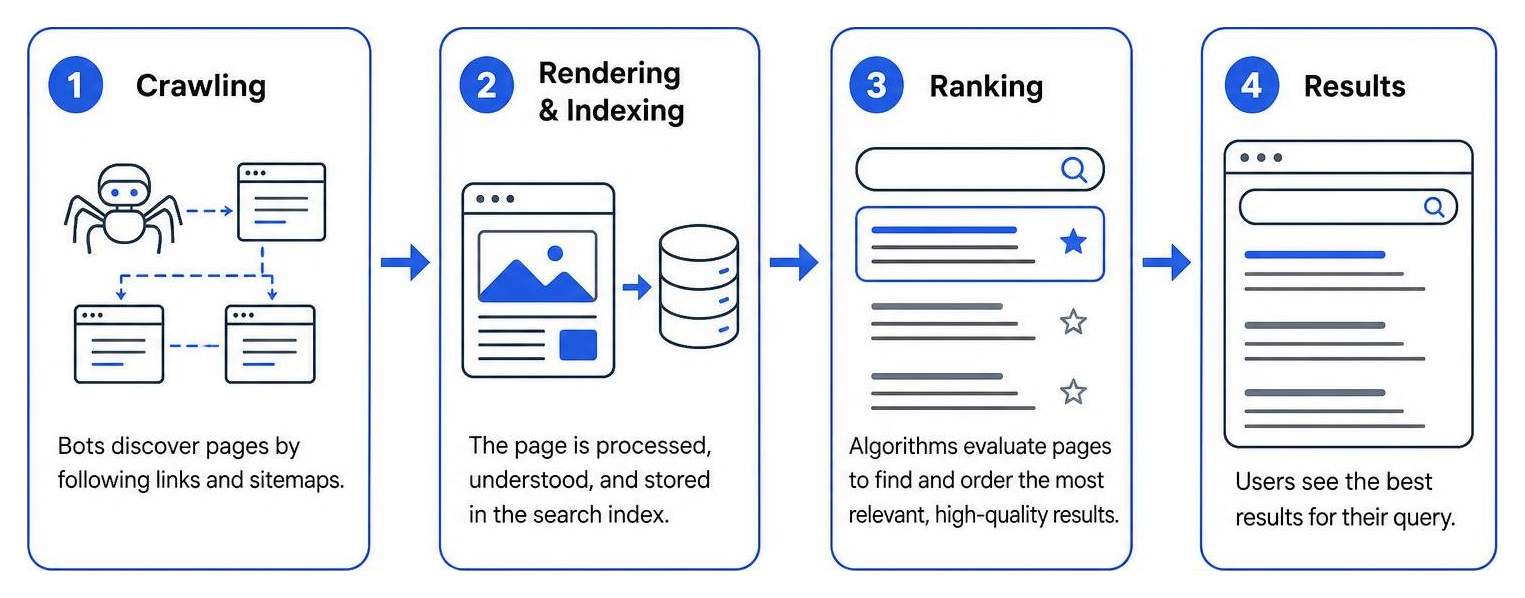
- Crawling: Automated software programs (such as Googlebot) discover new and updated pages across the web. They navigate from page to page by following hyperlinks and reading XML sitemaps. If your site lacks internal links or blocks crawlers, search engines cannot discover your pages.
- Indexing & Rendering: Once a crawler discovers a page, the search engine processes its code, layout, text, and visual elements (rendering). It then analyzes the subject matter and stores the page in a massive search index database.
- Ranking: When a user enters a search query, the algorithm scans its index to select and order the most relevant, high-quality results. Ranking algorithms evaluate hundreds of factors—including query relevance, page authority, content freshness, and user experience signals.
The Evolution of Search Engine Algorithms
In the late 1990s and early 2000s, search algorithms were relatively simple. Google’s original PageRank algorithm revolutionized search by using incoming hyperlinks as votes of confidence to determine site authority. However, early webmasters frequently gamed these early systems using repetitive keyword stuffing and manipulative link schemes.
To protect search quality, search engines evolved through major algorithmic shifts:
- Google Caffeine (2010): Rebuilt the search indexing system to provide 50% fresher search results, allowing new content to be crawled and indexed almost instantly.
- Panda Update (2011): Targeted thin, low-quality, and scraped content, rewarding sites with deep, original research and clear user value.
- Penguin Update (2012): Penalized websites using unnatural link building schemes, bought links, and aggressive keyword anchor text manipulation.
- Mobile-First Indexing (2016–2020): In October 2016, mobile web browsing surpassed desktop usage globally (reaching 51.3% of web page loads). Google shifted to indexing and ranking sites based on their mobile versions rather than desktop configurations.
- Modern AI & Quality Updates: Search engines now heavily evaluate real-world experience, topical depth, page accessibility, and intent satisfaction, updating their core ranking algorithms hundreds of times each year.
Core Pillars and Implementation Tactics
Core Pillars of Search Engine Optimization
On-page optimization forms the foundation of modern SEO. It involves structuring individual web pages so both search engines and human readers can immediately understand their purpose. Key on-page elements include:
- Title Tags: Concise titles (kept under 60-70 characters) featuring your primary keyword and brand name.
- Meta Descriptions: Compelling page summaries (around 150-160 characters) designed to maximize click-through rates from search results.
- Header Tags (H1, H2, H3): Clear structural headings that break body text into logical sub-topics for easy scanning.
- Internal Linking: Hyperlinks connecting related pages on your website, distributing authority and guiding visitors through their buyer journey.
For businesses running online stores, applying these on-page principles to product pages, category structures, and user reviews is critical. To dive deeper into product optimization, review our Complete Ecommerce SEO Guide.
Technical SEO and Website Architecture
Technical SEO ensures that search crawlers can discover, crawl, render, and index your website without encountering technical roadblocks. If your technical foundation is broken, even the best content will fail to rank.
Core technical factors include:
- Crawl Budget & Accessibility: Using
robots.txtfiles to guide crawlers away from administrative pages, and submitting updated XML sitemaps through webmaster tools. - Site Speed & Core Web Vitals: Optimizing image file sizes, leveraging browser caching, and minimizing unnecessary code so pages load instantly on mobile networks.
- Canonicalization: Adding
rel="canonical"tags or setting up 301 redirects to eliminate duplicate content issues. - Structured Data (Schema.org): Implementing microdata code snippets that help search engines understand specific entity details like local addresses, service offerings, and product reviews.
Building a clean technical setup works hand-in-hand with your broader strategy. Learn how technical health fits into your overall marketing framework in our guide to Digital Marketing 101.
Modern Search Engine Optimization in the AI Era
Search has entered a transformative period driven by generative AI, AI Overviews, and conversational search platforms. AI-driven search models break complex queries down into secondary sub-topics—a process known as query fan-out—to synthesize immediate answers directly on the results page.
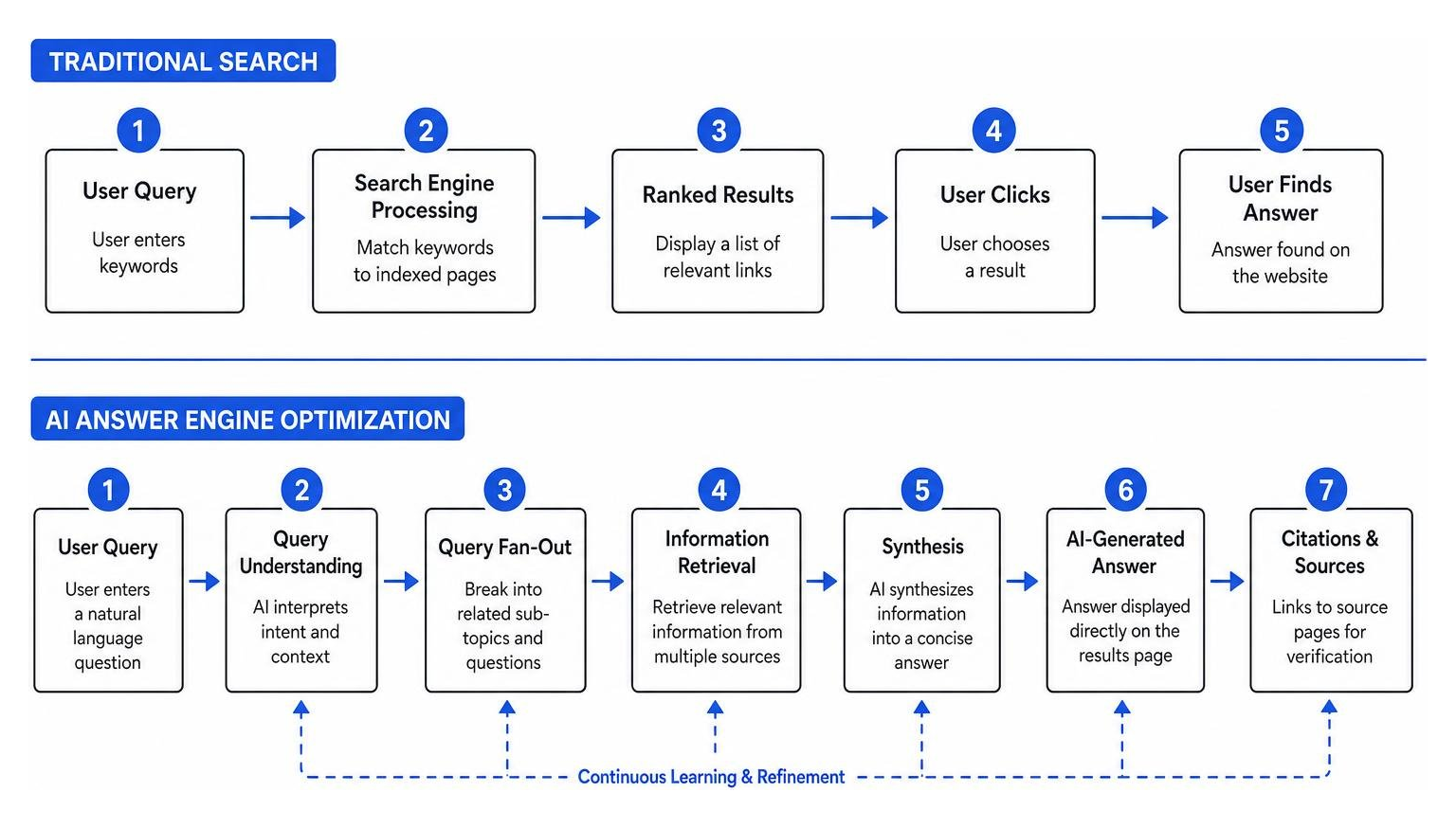
To maintain search visibility in this evolving ecosystem:
- Focus on Intent Density: Place direct, clear answers at the very top of your pages rather than padding articles with unnecessary word count.
- Build Topical Authority: Cover your industry topics comprehensively across interconnected clusters of articles rather than writing isolated posts.
- Optimize for Answer Engines (AEO): Format information using clear list items, bullet points, concise summary tables, and Schema markup so generative models can easily extract and cite your site as a trusted source.
For an encyclopedic background on how web search technologies developed over time, consult this Overview of Search Engine Optimization.
Local vs. International Search Optimization
While international SEO relies on hreflang tags, multi-regional domain structures, and global content localization to target different languages and countries, local SEO focuses on capturing geographically constrained searches (such as “SEO services in Miami” or “web design near me”).
For South Florida businesses operating in areas like Hollywood, Fort Lauderdale, Miami, and Aventura, local search optimization is often the primary driver of new customer inquiries. Key local optimization steps include:
- Google Business Profile: Claiming, verifying, and fully updating your profile with exact business hours, service categories, high-resolution photos, and regular posts.
- Local Citation Consistency: Ensuring your Name, Address, and Phone number (NAP) are identical across all online business listings and local web directories.
- Geotargeted Content: Developing dedicated service pages tailored to the specific local communities you serve.
To strengthen your local digital footprint, explore our comprehensive Local Citation Building Guide and our practical guide to Comparing Local SEO Packages.
SEO Ethics: White Hat vs. Black Hat Practices
Understanding the distinction between ethical and deceptive tactics is critical for protecting your digital assets and domain reputation.
| Feature / Strategy | White Hat SEO | Grey Hat SEO | Black Hat SEO |
|---|---|---|---|
| Primary Focus | Human searchers & user experience | Exploiting minor algorithmic gaps | Deceiving search algorithms |
| Search Engine Compliance | Fully compliant with guidelines | Technically compliant, risky intent | Direct violation of webmaster rules |
| Tactics Used | Helpful content, clear UX, natural links | Expired domain redirects, link exchanges | Keyword stuffing, hidden text, link farms |
| Risk Level | Low risk; long-term sustainable growth | Moderate risk; potential update loss | High risk; severe penalties & index removal |
| Impact on Brand | Builds long-term trust & equity | Short-term gains; volatile presence | Destroys domain authority & visibility |
Safe Growth with White Hat Methods
White hat search engine optimization focuses on creating high-value content and reliable user experiences that align strictly with search engine quality guidelines. This approach prioritizes:
- People-First Content Creation: Writing natural, highly informative content that answers real questions based on genuine industry expertise.
- Organic Link Building: Earning external backlinks naturally through original research, helpful resources, and strong community outreach.
- User Accessibility & Media: Ensuring fast loading speeds, clean navigation, mobile responsiveness, and descriptive image alt tags that serve screen readers and crawlers alike.
To create strategic copy that ranks cleanly while engaging readers, refer to our Content Creation Guide.
Risks of Deceptive Black Hat Tactics
Black hat SEO relies on manipulative tricks designed to game search algorithms for quick, unsustainable rankings. Common black hat tactics include:
- Keyword Stuffing: Forcing repetitive search keywords into body copy until it sounds unnatural.
- Hidden Text & Links: Matching font colors to page background colors or positioning text off-screen to hide keywords from human visitors while showing them to crawlers.
- Link Farms & Private Blog Networks (PBNs): Purchasing low-quality, automated backlink blasts from deceptive website networks.
- Cloaking: Showing one version of a web page to search engine crawlers and a completely different version to human users.
The consequences of using black hat methods are severe. Search engines issue manual action penalties or deploy automated suppression algorithms against deceptive sites. In extreme cases, website traffic can drop by 70% or more overnight, and entire domains can be permanently removed from search engine indexes.
Measuring SEO Performance and Marketing Synergy

Essential Key Performance Indicators and Tracking Tools
To measure the business impact of your optimization efforts, you must monitor metrics that extend beyond simple keyword rankings. Essential Key Performance Indicators (KPIs) include:
- Organic Traffic: The total number of unique visitors arriving on your website through unpaid search results.
- Organic Conversions: The volume of phone calls, contact form submissions, appointment bookings, or sales generated by organic search visitors.
- Core Web Vitals & Technical Health: Monitoring page speed, visual stability, and technical crawl error reports via Google Search Console.
- Ranking Volatility & Impressions: Tracking how frequently your site appears in search features across target keyword clusters.
Tools like Google Search Console and Bing Webmaster Tools provide direct feedback from search engines regarding crawl status, indexed pages, and search query impressions. Combining these technical tools with analytics software lets you attribute real revenue back to your organic strategy. For instance, incorporating press releases into your broader marketing mix can amplify search authority; read our Press Release SEO Guide to see how PR drives referral traffic and brand mentions.
Aligning SEO with Content Marketing and Web Design
Search engine optimization does not exist in an isolated silo. It works best when integrated directly into your overall digital strategy, web development, and content production.
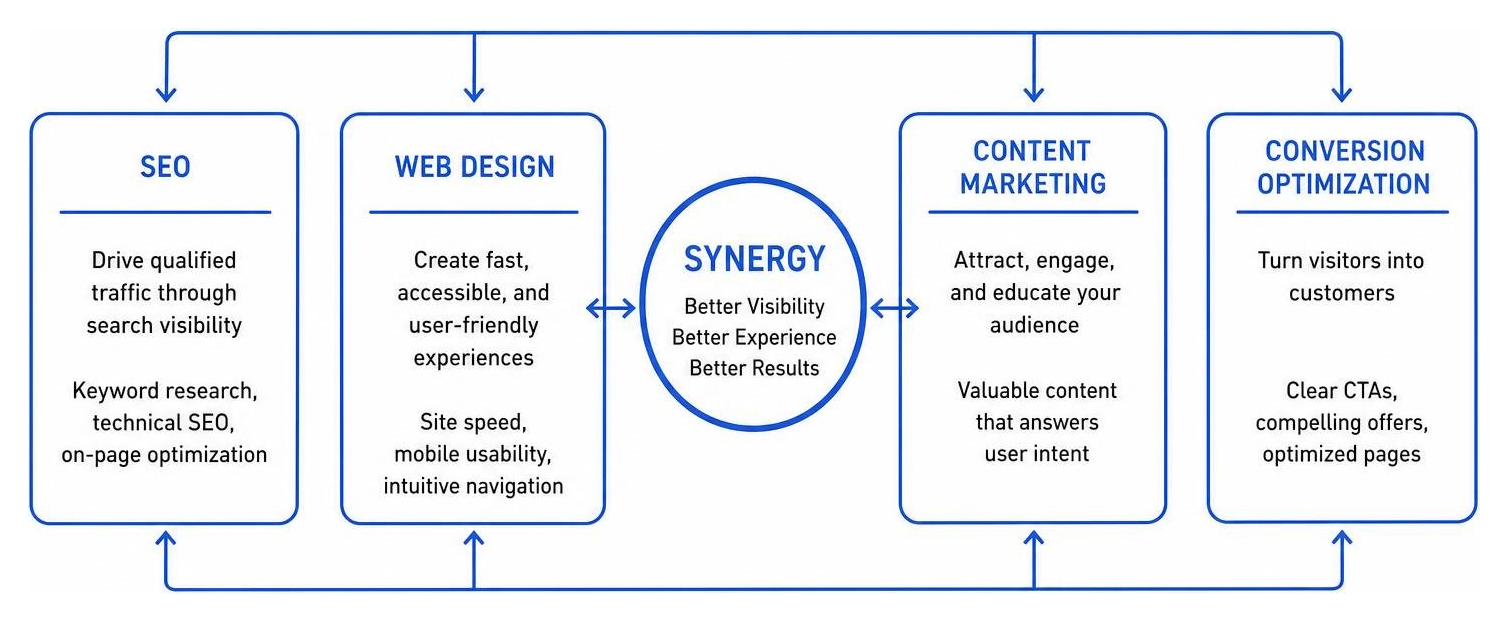
- SEO & Web Design: A visually appealing site will fail to convert if it loads slowly or features confusing navigation. Designing intuitive layouts, accessible button spacing, and clean mobile structures ensures visitors stay on your site once they arrive.
- SEO & Content Marketing: Keyword research identifies the exact questions your ideal customers are asking. Content marketing delivers the expert answers, building buyer trust across every stage of the sales funnel.
For small businesses trying to balance marketing priorities effectively within a budget, review our breakdown on Small Business Package Comparison.
Frequently Asked Questions About SEO Basics
How long does it take to see results from search engine optimization?
SEO is a long-term investment. While technical updates (like fixing broken redirects or updating sitemaps) can reflect in search results within a few days to a couple of weeks, noticeable traffic improvements generally take between 3 to 6 months.
Search engines need time to crawl updated content, process user interaction signals, re-evaluate domain authority, and adjust ranking placements across competitive query spaces. Consistency and continuous optimization are key to achieving lasting momentum.
Is keyword research still relevant with AI search engines?
Yes, keyword research remains essential, but the way we analyze search queries has evolved. Modern keyword research focuses heavily on search intent, entity relationships, and conversational prompt structures rather than exact-match keyword density.
Instead of targeting isolated single words, modern SEO involves researching long-tail questions (7+ words), identifying topical content gaps, and organizing pages around comprehensive entities that satisfy both traditional search algorithms and generative AI models.
What is the difference between SEO and SEM?
The primary difference lies in how search visibility is acquired:
- SEO (Search Engine Optimization) focuses on earning free, organic visibility by improving site structure, content quality, and technical health. It requires an initial effort but yields long-term compounding traffic without ongoing per-click costs.
- SEM (Search Engine Marketing) typically refers to paid search advertising (such as pay-per-click ads). Advertisers bid on keywords to display sponsored ads at the top of SERPs, driving immediate traffic that stops the moment ad spend halts.
Conclusion
Mastering search engine optimization requires balancing technical health, strategic keyword alignment, high-quality content creation, and local authority. By moving away from outdated shortcuts and focusing on user intent, site accessibility, and clear business value, you position your brand for continuous organic growth.
At SEO Maven, we are a South Florida boutique agency focused on SEO, custom web design, content strategy, DOOH/OTT advertising, and consulting. We specialize in helping small and medium-sized businesses across Hollywood, Fort Lauderdale, Miami, Aventura, and South Florida achieve maximum ROI by making their digital presence work smarter and harder.
If you are ready to expand your organic visibility, attract qualified leads, and grow your business sustainably, explore our tailored Professional SEO Services today.