Why Digital Marketing Is the Great Equalizer for Small Businesses
Digital marketing for small businesses is the use of online channels — search, email, social media, and paid ads — to reach customers, build trust, and grow revenue without needing a massive budget.
Here’s a quick snapshot of what it includes and why it works:
| Channel | What It Does | Best For |
|---|---|---|
| SEO | Gets you found on Google | Long-term organic traffic |
| Email marketing | Nurtures and retains customers | ROI-focused campaigns |
| Social media | Builds community and awareness | Engagement and brand trust |
| Google Business Profile | Drives local discovery | Foot traffic and calls |
| Paid ads | Generates leads fast | Quick wins and retargeting |
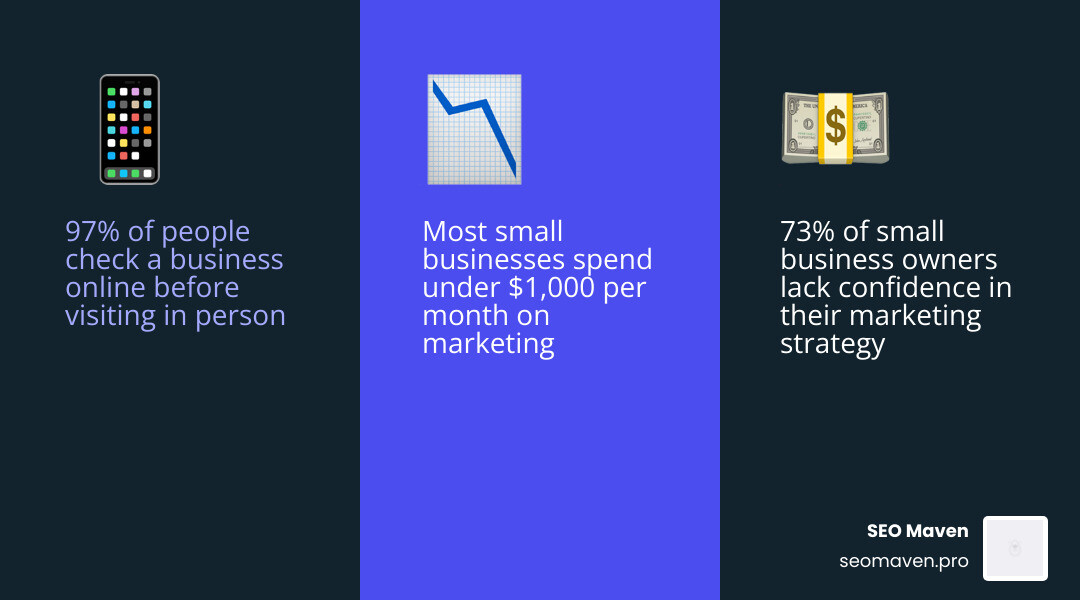
Think about this: 97% of people check a business online before visiting in person. That means your digital presence isn’t optional — it’s the first impression you make on almost every potential customer.
Yet despite this, 73% of small business owners say they lack confidence in their marketing strategy. And with most spending under $1,000 a month on marketing, the pressure to make every dollar count is real.
The good news? You don’t need a Fortune 500 budget to compete. Small businesses have something big brands can’t easily replicate — closeness to their customers, community trust, and the agility to move fast.
This guide breaks down exactly how to use digital marketing to grow your small business in 2026, even with limited time and resources.
I’m Fernando Larez, a marketing professional with hands-on experience in SEO, digital strategy, paid advertising, and brand development across multiple industries — including helping small businesses navigate the challenges of digital marketing for small business in competitive local markets. Let’s dig into what actually works.
Learn more about digital marketing small business:
What Digital Marketing Small Business Owners Need to Know First
At its core, digital marketing small business strategy is about using online channels to do four jobs well:
- Get discovered
- Earn trust
- Turn interest into leads or sales
- Bring customers back again
That includes SEO, content marketing, social media, email, paid search, paid social, and your Google Business Profile.
Why is this essential in 2026? Because the buyer journey starts long before someone calls you. People search, compare, scroll reviews, check your website on mobile, and quietly judge your credibility before you ever hear from them.
For small businesses in South Florida and beyond, this matters even more. Community support is a real growth driver. Research shows 67% of SMB leaders say community support has been important to their survival. Digital marketing helps you turn that support into visibility, trust, and repeat business.
Why digital marketing small business success depends on visibility and trust
Visibility gets you seen. Trust gets you chosen.
A business can have the best service in town, but if it is buried on page three of search results, has an outdated website, or a social feed that looks like it retired in 2023, customers move on fast.
Trust signals include:
- A clear, mobile-friendly website
- Accurate business info across the web
- Strong Google reviews
- Helpful content
- Real photos and updated social profiles
- Fast load times
- Consistent branding and messaging
Reviews and local search are especially important for service businesses. When someone searches “near me,” they usually are not conducting a philosophical inquiry. They need help now.
The biggest advantages small businesses have over bigger brands
Small businesses often win because they are:
- Closer to customers
- Faster to adapt
- More local and relevant
- More personal in communication
- Better at building real community ties
Big brands may have bigger budgets. Small businesses have specificity. That matters. A focused local company that understands its customers deeply can often outperform a larger competitor with generic messaging.
The Best Digital Marketing Channels for Small Businesses in 2026
Not every channel deserves your time right now. The best channel is the one that matches your business model, buyer intent, and available resources.
Here is a practical comparison:
| Channel | Speed | Cost Efficiency | Best Use | Watch-Out |
|---|---|---|---|---|
| SEO | Slower start, compounding over time | High long-term | Organic traffic, local searches, trust | Requires consistency |
| Email marketing | Fast once you have a list | Excellent | Retention, repeat sales, nurture | Needs list growth |
| Social media | Medium | Moderate | Awareness, community, proof | Organic reach is limited |
| Paid ads | Fastest | Variable | Quick leads, retargeting, testing offers | Can waste budget without tracking |
How to choose the right digital marketing small business channels
Choose channels based on:
- Whether you are local, eCommerce, B2B, or service-based
- Where your buyers already spend time
- How quickly you need results
- Whether you have content capacity
- Budget and internal time
A good rule: start with one primary acquisition channel and one retention channel.
Examples:
- Local service business: SEO + Google Business Profile, then email
- B2B service: SEO or LinkedIn, then email
- Product brand: social video or paid social, then email
- High-intent service: Google Ads, then SEO for long-term efficiency
SEO and local search for long-term visibility
SEO helps small businesses show up when buyers are actively searching. That makes it one of the highest-intent channels available.
For local businesses, start with:
- Keyword research for services plus city names
- Individual service pages
- Title tags and meta descriptions
- Internal links
- Strong calls to action
- Mobile-friendly design
- Fast page speed
- Consistent name, address, and phone number
- Review generation
- Google Business Profile optimization
- Local citations and quality backlinks
If you serve South Florida, that means building pages and content around the places you actually serve, such as Hollywood, Fort Lauderdale, Miami, Aventura, and broader South Florida service areas where relevant.
Also, do not ignore your Google Business Profile. Fill out every field, add photos, post updates, list hours, and encourage reviews. For many local businesses, the map pack can drive more action than standard organic listings.
If you want help evaluating budget-friendly options, our guide on SEO packages for small business budgets is a solid next step.
Social media, short-form video, and community engagement
Social media is best for visibility, familiarity, and proof. It is not always the best direct-response channel, but it helps buyers feel like your business is active and trustworthy.
In 2026, short-form vertical video is one of the strongest content formats. Reels, Shorts, TikToks, and similar video posts work because they are fast, mobile-friendly, and human.
Best practices:
- Focus on 2-3 platforms, not all of them
- Choose based on audience, not trends alone
- Use short-form vertical video when possible
- Mix educational, behind-the-scenes, testimonial, and offer content
- Post consistently, even if modestly
- Reply to comments and messages
- Add clear CTAs
Organic reach is not what it used to be. On Facebook and Instagram business pages, average organic reach is low, so quality matters more than posting ten forgettable graphics a week.

Platform fit usually looks like this:
- Instagram: visual local brands, food, beauty, lifestyle, retail
- Facebook: local community visibility, events, older demographics
- LinkedIn: B2B services, recruiting, thought leadership
- Pinterest: visual products, home, design, lifestyle inspiration
- X or Twitter: niche conversations, commentary, updates
For deeper platform-specific help, see our guides on Twitter for Small Business Marketing, 10 LinkedIn Marketing Tips, 5 Pinterest Marketing Strategies, and How to Make Your Small Business the Main Interest on Pinterest.
Email marketing and retention on a budget
Email remains one of the best-performing channels for SMBs. Research consistently shows around a $36 return for every $1 spent on email marketing, and over 50% of consumers say they buy from marketing emails at least monthly.
That is not a small detail. It is a giant neon sign.
Why email works:
- You own the audience
- It is cheap to run
- It helps retention and repeat sales
- It supports promotions, reminders, and education
- It is easier to measure than many channels
And remember: it costs five times as much to attract a new customer than to retain an existing one.
Good small-business email basics:
- Add sign-up forms to your site
- Offer a lead magnet, coupon, checklist, or useful download
- Segment by customer type, location, interest, or purchase history
- Create a welcome sequence
- Send regular newsletters
- Include timely offers and useful tips
- Personalize where possible
Simple automations can do a lot of heavy lifting:
- Welcome email after signup
- Appointment reminder
- Follow-up after purchase
- Review request
- Win-back campaign for inactive customers
Paid ads, retargeting, and quick-win lead generation
Paid ads are the fastest way to generate traffic and leads, but only if the basics are in place.
A few essentials:
- Use high-intent keywords for Google Ads
- Build dedicated landing pages
- Track form fills, calls, and purchases
- Use retargeting to re-engage visitors
- Watch cost per lead, not just clicks
- Test one offer at a time
Google Ads work well when buyers are already searching. Meta ads are better for attention, retargeting, and visual offers. For many small businesses, a blended setup works best: search ads for intent, social ads for retargeting and awareness.
If PPC is on your radar, read Why Your Business Needs a PPC Ad Company to Survive the Internet.
How to Build a Small Business Digital Marketing Plan Without Overspending
A plan does not need to be fancy. It needs to be clear.
Most small businesses are not suffering from a lack of tactics. They are suffering from too many random tactics and not enough focus.
Research shows 52% of small businesses spend under $1,000 per month on marketing, and 73% lack confidence in their strategy. That makes a lean, prioritized plan essential.
Start with audience, offer, and clear positioning
Before you run ads or write content, answer:
- Who is your best-fit customer?
- What problem do you solve?
- Why should they choose you over alternatives?
- What local relevance or expertise makes you different?
Create simple buyer personas around pain points, goals, objections, and buying triggers. Then sharpen your offer and messaging around those realities.
Trust signals matter here too:
- Testimonials and reviews
- Certifications or credentials
- Before-and-after examples
- FAQs
- Transparent service information
- Clear contact details
For messaging and differentiation, our guide on building a brand that actually sticks can help.
Create a lean 90-day execution plan
You do not need a 47-tab spreadsheet to start. You need momentum.
A simple 90-day plan:
Weeks 1-2
- Clarify positioning and ideal customer
- Fix homepage messaging
- Make contact info obvious
- Set up GA4 and Google Search Console
- Claim and optimize Google Business Profile
Weeks 3-4
- Request reviews from recent customers
- Create or improve service pages
- Add lead forms and calls to action
- Set up email signup and welcome series
Month 2
- Publish foundational blog content
- Start consistent social posting
- Launch one primary campaign
- Add UTM tracking to email and campaign links
Month 3
- Review traffic, leads, and conversions
- Improve underperforming pages
- Expand winning topics or ads
- Build simple retargeting or follow-up automations
The point is not perfection. It is compounding.
Budget allocation for DIY, freelancer, or agency support
There are a few realistic paths:
- DIY: lower cash cost, higher time cost
- Freelancer: good for specialist tasks like SEO fixes or ad setup
- Agency: better when you need integrated strategy and execution
- Hybrid: owner leads vision, specialists handle technical work
We usually recommend thinking in ROI terms, not “cheapest possible.” If you spend ten hours a week wrestling with tools you hate, that has a cost too.
If you are comparing support options, check out How to Pick a Digital Marketing Agency That Actually Answers the Phone.
How Small Businesses Can Use Content, SEO, Social, and Email Together
The smartest marketing systems reuse effort.
Instead of creating separate ideas for every channel, build around one core topic and repurpose it across formats.
Turn one idea into blog, email, video, and social content
Example:
- Write a blog post answering a common buyer question
- Turn key points into an email newsletter
- Record a short Reel summarizing one tip
- Create a carousel with quick takeaways
- Link them all back to one offer or CTA
This approach saves time, improves consistency, and gives your audience multiple ways to engage.
For more content ideas, browse our SEO Blog.
Content marketing that earns traffic, leads, and backlinks
Content works best when it answers real buyer questions.
Start with a content audit:
- What do you already have?
- What still gets traffic?
- What is outdated?
- What important topics are missing?
Then map content to keywords and search intent. Good content types for small businesses include:
- Service pages
- FAQ pages
- Buying guides
- Local guides
- Case studies
- Comparison posts
- Problem-solution blog posts
- Evergreen educational articles
High-quality content can also earn backlinks when it is genuinely useful. Think less “content for content’s sake” and more “best answer on the topic.”
Local-first tactics that help service businesses win nearby customers
For local service businesses, local-first usually beats broad-first.
Focus on:
- Google Business Profile optimization
- Location-specific service pages
- Consistent business listings
- Review generation and responses
- Local keywords in titles and copy
- Photos, offers, and updates
- Community partnerships and mentions
If local SEO is your main growth path, our Marketing Services page explains how we approach visibility for small businesses.
Partnerships, influencers, affiliates, and automation for extra reach
Small businesses can stretch reach without massive ad spend by using partnerships.
Options include:
- Micro-influencers with engaged local audiences
- Referral partnerships with complementary businesses
- Affiliate or ambassador programs
- Community collaborations
- Co-branded events or giveaways
Micro-influencers are often more accessible and more affordable than big creators. The key is relevance, not vanity metrics.
Automation also helps. Good use cases include:
- Email nurture sequences
- Review request workflows
- Social scheduling
- Lead routing through a CRM
- Missed-call follow-up
- Appointment reminders
AI can help with drafting, ideation, and reporting, but it still needs human direction. The tool is not the strategy. It is the intern that never sleeps.
Measuring Results and Improving ROI From Digital Marketing Small Business Campaigns
If you cannot measure it, you cannot improve it. And if you only measure likes, you may feel busy while staying broke.
The metrics that matter most for small businesses
Track business outcomes first:
- Qualified leads
- Phone calls
- Form fills
- Booked appointments
- Sales
- Revenue attributed to campaigns
- Repeat purchases
- Cost per lead
- Customer acquisition cost
- Customer lifetime value
- Return on ad spend for paid campaigns
For many SMBs, three simple numbers go a long way:
- Total leads from digital
- Cost per lead by channel
- Revenue from those leads
How to track performance with simple tools and UTM tags
You do not need enterprise software to get useful insight.
Start with:
- Google Analytics 4 for website traffic and conversions
- Google Search Console for search visibility
- Google Business Profile insights for local actions
- A simple CRM or lead tracker
- Call tracking if phone calls matter
- UTM tags on email and paid campaign links
UTM tags help you see where traffic and conversions really came from. That means fewer guesses and fewer “we think Instagram did it” meetings.
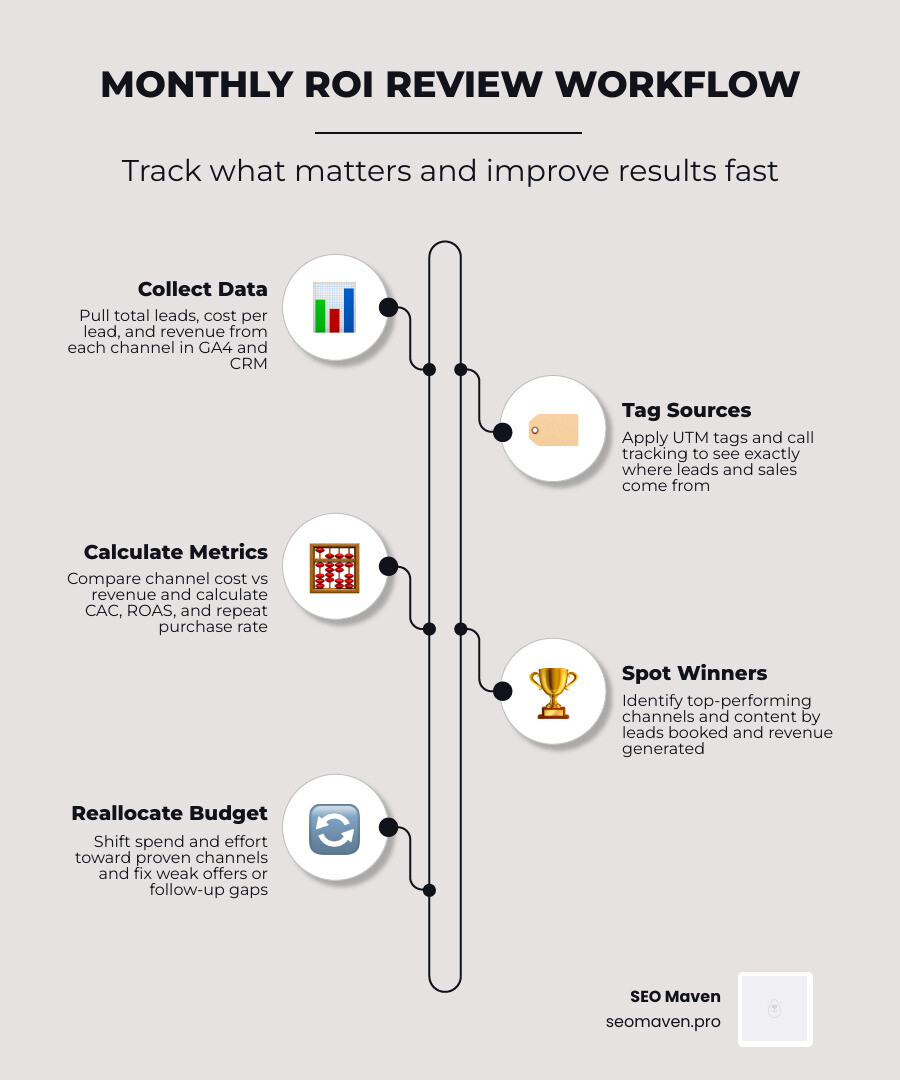
Review performance monthly. Compare channel costs to leads and revenue, then shift effort toward what is actually working.
Common digital marketing mistakes and how to fix them fast
Common mistakes:
- Spreading budget across too many channels
- Posting without a strategy
- Ignoring existing customers
- Weak website copy or poor mobile experience
- No conversion tracking
- No follow-up system
- Quitting SEO too early
- Chasing vanity metrics like followers over leads
Quick fixes:
- Pick one main acquisition channel
- Add one retention channel, usually email
- Improve your website before scaling traffic
- Install tracking before spending more
- Use clear offers and landing pages
- Commit to SEO for at least several months
- Ask happy customers for reviews consistently
Frequently Asked Questions about Digital Marketing Small Business
What is the best digital marketing strategy for a small business with a limited budget?
Start with the highest-leverage basics:
- Optimize your website
- Set up and improve your Google Business Profile
- Build an email list
- Choose one main acquisition channel
- Publish consistent, useful content
For most local businesses, SEO plus Google Business Profile is a strong foundation. Add email for retention and repeat business.
How long does digital marketing take to work for small businesses?
It depends on the channel.
- Paid ads: often fastest, sometimes within days
- Email: immediate if you already have a list
- Google Business Profile and local optimization: often weeks
- SEO: usually months, but it compounds over time
Fast channels cost more. Slow channels often build stronger long-term efficiency. The sweet spot is usually using both.
Should a small business hire help or do digital marketing in-house?
Usually, a hybrid approach works best.
Owners should stay involved in:
- Positioning
- Offer clarity
- Customer insights
- Brand voice
Specialists can help with:
- SEO implementation
- Website development
- Content strategy
- Paid ads
- Tracking and reporting
If you are ready for support, explore our Marketing Services.
Conclusion
Digital marketing is not about doing everything. It is about doing the right few things consistently.
For small businesses, the formula is straightforward:
- Build a trustworthy online presence
- Focus on the channels that match buyer intent
- Use content, SEO, social, and email together
- Measure real outcomes
- Retain customers as seriously as you pursue new ones
That is how sustainable growth happens, especially when resources are limited.
At SEO Maven, we help small businesses do more with less through focused SEO, content marketing, web design, consulting, and strategic campaigns built for real ROI. If you want a smarter, more manageable approach to growth in South Florida, Miami, Fort Lauderdale, Hollywood, Aventura, or across Florida, visit our Marketing Services page.
You can also keep learning with: