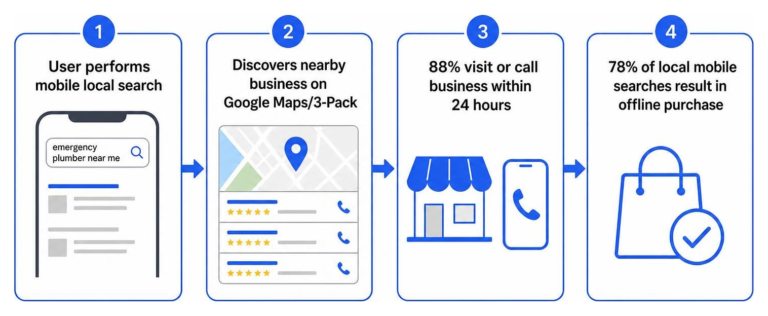
How to Choose the Right Search Optimization Agency
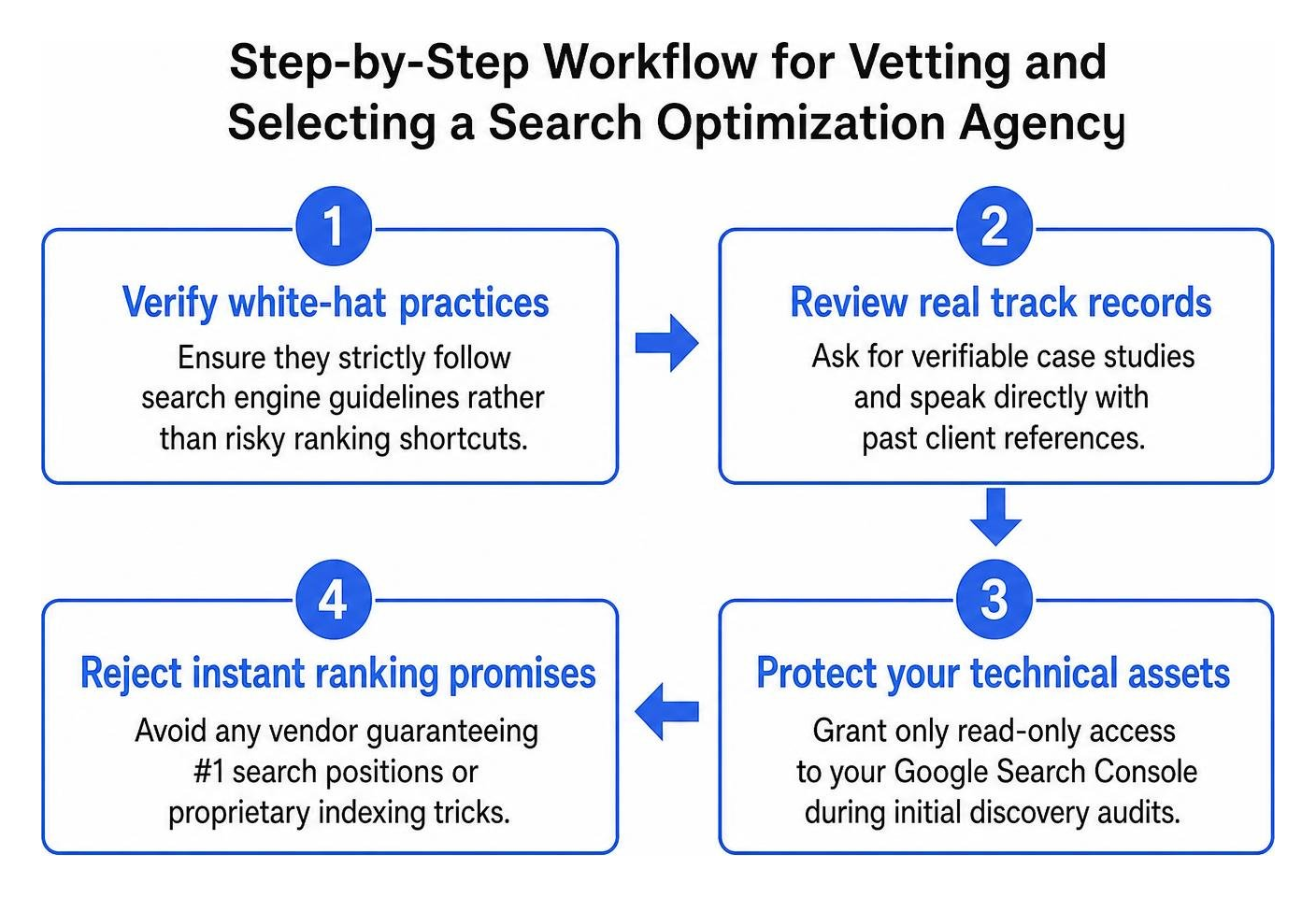
To select the right search optimization agency, follow this straightforward vetting framework:
- Verify white-hat practices: Ensure they strictly follow search engine guidelines rather than risky ranking shortcuts.
- Review real track records: Ask for verifiable case studies and speak directly with past client references.
- Protect your technical assets: Grant only read-only access to your Google Search Console during initial discovery audits.
- Reject instant ranking promises: Avoid any vendor guaranteeing #1 search positions or proprietary indexing tricks.
Finding an honest partner means prioritizing transparency, technical competence, and sustainable revenue growth over empty vanity metrics.
I’m Fernando Larez, a marketing leader based in South Florida with years of experience driving qualified leads, organic visibility, and multimedia campaigns for growing brands. Throughout my career, I have helped businesses navigate digital strategy and partner with the right search optimization agency to achieve measurable, long-term search performance.
Key search optimization agency vocabulary:
What to Look for in a Search Optimization Agency
Navigating the landscape of modern digital marketing requires a clear framework. When you evaluate an outside partner, you are trusting them with your brand’s digital storefront, domain reputation, and long-term customer pipeline. An experienced vendor will look deeply at your specific business model, target audience, and competitive environment rather than offering a cookie-cutter package.
A great place to start your evaluation is using The Ultimate Checklist for Comparing Professional SEO Services to review operational transparency. True industry experts understand How an SEO Agency Can Help You Rank by combining technical site architecture, helpful content creation, and authoritative brand building.
Look for partners who gladly connect you with past client references. When you speak to those references, ask about communication workflows, responsiveness during major algorithm shifts, and whether the agency met projected milestones.
In-House Team vs. Search Optimization Agency
Deciding whether to build an internal search team or partner with an established agency comes down to resources, scope, and technical versatility. While an in-house employee provides dedicated daily focus on your brand, a single hire rarely possesses the multidisciplinary skill set required in 2026—spanning technical crawling audits, digital PR, conversion rate optimization, schema architecture, and Generative Engine Optimization (GEO).
| Evaluation Factor | In-House Team | Boutique SEO Agency Partner |
|---|---|---|
| Skill Diversity | Often limited to generalist skill sets | Dedicated specialists (technical, content, link earning) |
| Tooling & Software | Company covers enterprise software subscriptions | Full suite of analytics, crawling, and research tools included |
| Scalability | Slow to scale; requires hiring and onboarding | Instantly adaptable to shifting campaign goals |
| Strategic Agility | Isolated to single-domain insights | Cross-industry expertise and broader algorithmic pattern data |
| Overhead Burden | Salaries, benefits, training, and management overhead | Streamlined, performance-driven retainer |
For small and mid-sized businesses, partnering with an agency allows you to maximize your budget, tapping into specialized talent without the overhead of building an entire internal department from scratch.
Essential Evaluation Factors and Interview Questions
During the vendor discovery process, treat your initial calls like detailed interviews. To properly assess prospective partners, explore Compare Local SEO Packages A Practical Guide to Choosing to ensure you are comparing equivalent deliverables.
When speaking with candidates, ask the following pointed questions:
- How do your recommendations align with official search engine webmaster guidelines?
- Can you share specific examples of how you adapted client strategies during recent core algorithm updates?
- What specific inputs or development resources will you need from our internal team to execute changes?
- How do you track and report on conversions, revenue attribution, and organic search visibility?
- What is your process if a technical recommendation leads to an unexpected drop in indexation or traffic?
A qualified team will welcome these questions and answer them clearly without resorting to impenetrable jargon or vague excuses.
White Hat Standards vs. High-Risk Black Hat Practices
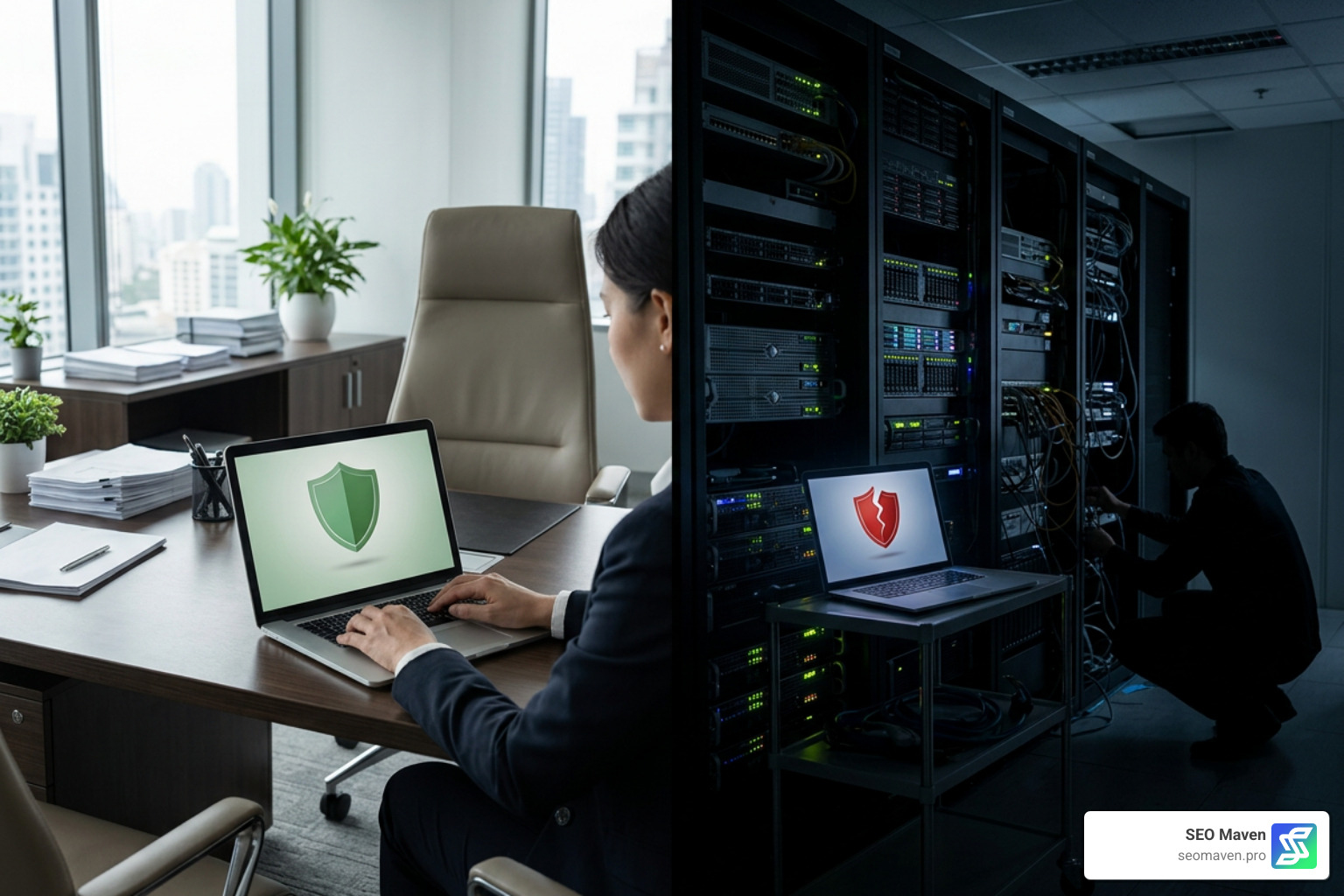
The digital marketing landscape is divided into sustainable, user-focused optimization (white hat) and risky, manipulative shortcuts (black hat). In the early days of search, aggressive tactics like keyword stuffing, hidden doorway pages, and automated link spam were common. Today, modern algorithms instantly detect and neutralize manipulative behaviors.
Understanding the core principles detailed in our Guide to Search Engine Optimization SEO helps protect your digital assets. Reputable agencies align every tactic with established Google Ranking Factors to ensure sustained performance.
Algorithm Safety and White Hat Foundations
White hat optimization focuses on providing genuine value to human users while ensuring search crawlers can seamlessly discover, understand, and index your content. Search engines update their ranking algorithms continuously—Google made over 500 algorithm changes in 2010 alone (nearly 1.5 updates per day), and today thousands of refinements happen every single year.
Foundational white hat work includes:
- Creating original, comprehensive content that thoroughly solves user search queries.
- Structuring internal linking hierarchies so equity flows naturally to core service pages.
- Applying proper meta directives and canonical tags to prevent duplicate content confusion.
- Improving page load speed, mobile usability, and overall accessibility.
To master these core pillars, review A Comprehensive Guide to Learning SEO Basics to understand how ethical optimization delivers compounding returns over time.
Legal Risks and Search De-Indexing Penalties
Partnering with an irresponsible vendor that cuts corners can result in severe penalties, manual actions, or complete removal from organic search results. The business impact can be devastating—for instance, when search portal KinderStart had its website removed from Google’s index, its traffic dropped by 70% almost immediately, sparking significant legal battles over index de-listing.
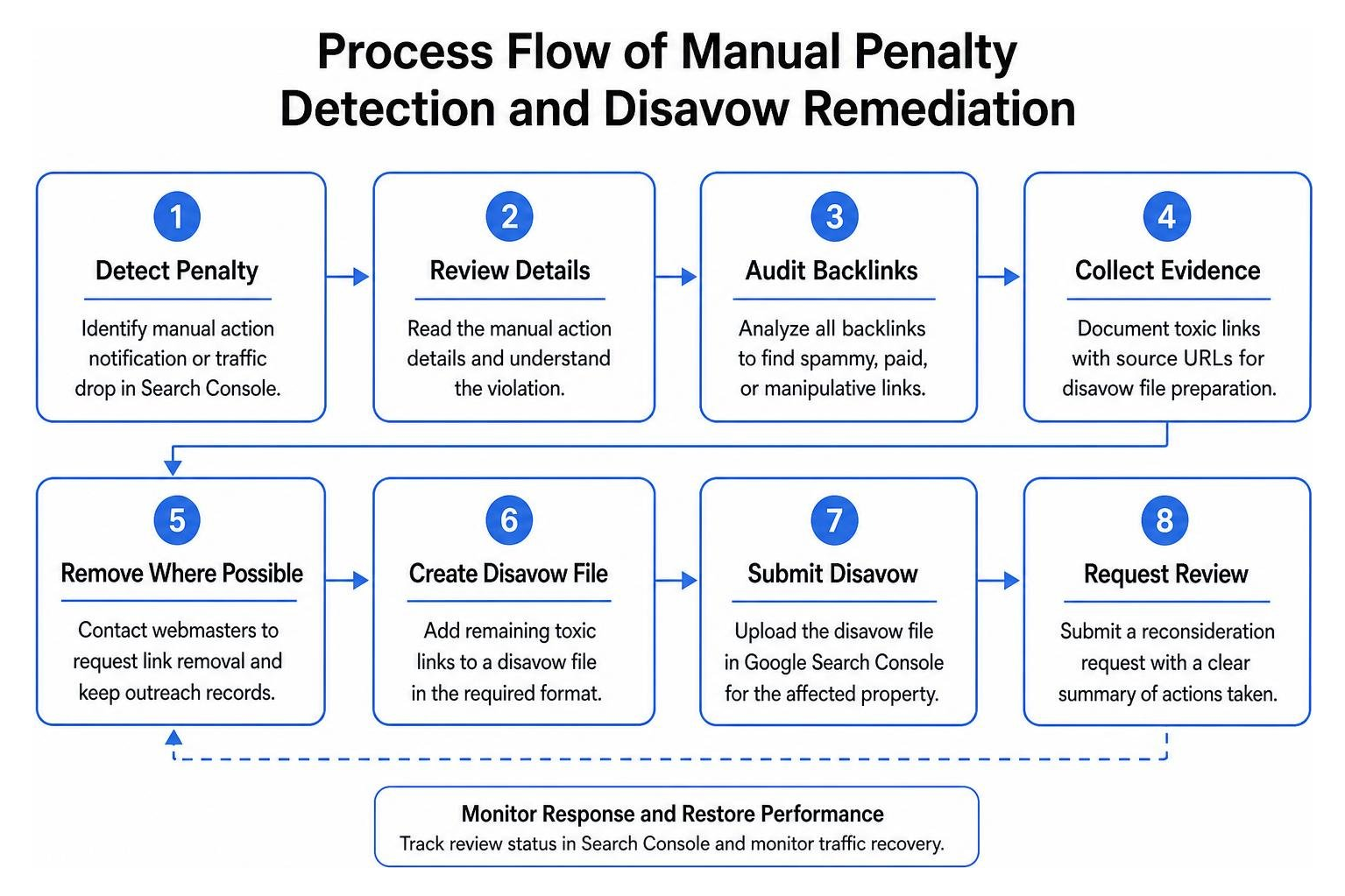
If an agency engages in manipulative backlink schemes, automated scraping, or hidden redirects on your domain, search engines hold the domain owner accountable, not the marketing vendor. Remediation requires tedious cleanups and filing disavow requests, as outlined in our Toxic Links Disavows SEO Guide.
Furthermore, deceptive practices carry legal consequences. In the United States, misleading marketing claims or fraudulent digital representation can be reported directly to consumer protection authorities, such as the Federal Trade Commission (FTC). Ethical agencies maintain total transparency, providing a clear record of every single change made on your website.
Modern Technical Strategies for Maximum Organic Reach
Technical search optimization is no longer just about editing title tags and submitting XML sitemaps. In 2026, leading search engines process pages using advanced machine learning models and dynamic rendering pipelines. Modern technical optimization ensures that search engine bots crawl your website efficiently without wasting server resources.
Next-Gen Services from a Search Optimization Agency
The rise of generative artificial intelligence has expanded search from traditional 10-blue-link results to AI overviews, conversational answers, and Large Language Model (LLM) discovery engines. Today, top-tier optimization involves Generative Engine Optimization (GEO) and Answer Engine Optimization (AEO).
Search engines now frequently utilize query fan-out techniques—breaking a single complex user prompt into multiple sub-queries to retrieve diverse data points before synthesizing an answer. To stay ahead, forward-thinking agencies utilize the Best Ranked SEO Tools for 2026 to optimize content structure, schema markup, and entity relationships, ensuring your brand is cited directly within AI-generated overviews.
Mobile-First Indexing and Core Technical Health
Mobile optimization is a foundational ranking requirement. In October 2016, mobile devices accounted for 51.3% of web page loads, officially overtaking desktop usage worldwide. Ever since search engines adopted mobile-first indexing, the mobile version of your website serves as the baseline for how your content is crawled, rendered, and ranked.
A comprehensive technical audit addresses:
- Responsive Web Performance: Eliminating intrusive interstitials, optimizing images, and reducing script execution times.
- Canonicalization: Implementing
rel="canonical"tags or 301 redirects to consolidate authority signals across variant URLs. - Crawl Efficiency: Managing
robots.txtdirectives and using page-leveltags to prevent index bloat from internal search pages or staging environments. - Index Freshness: Structuring content pipelines so search bots can process fresh updates quickly, a standard established when Google’s Caffeine update provided 50% fresher results for web searches.
International Search and Multilingual Architecture
For businesses serving diverse linguistic regions or expanding across borders, technical international architecture prevents search engines from serving the wrong regional content to users.
When optimizing for multilingual markets, an experienced agency implements:
- Hreflang Annotations: Correctly configured
hreflangtags tell crawlers which language and regional version of a URL to display based on user location. - Logical URL Structures: Using dedicated ccTLDs, subdomains, or subdirectories (e.g.,
/es/) to maintain clear regional separation. - Localized Intent Optimization: Translating intent rather than direct word-for-word translation, ensuring content matches local search colloquialisms, cultural nuances, and regional search behavior.
Measuring ROI and Realistic Performance Expectations
A successful relationship with an agency is built on accountability and tangible business growth. Rather than getting distracted by vanity metrics like total impressions or unbranded keyword rankings that do not generate revenue, a modern campaign focuses on qualified organic traffic, lead capture, and closed sales.
To see how specialized campaigns are structured around measurable return on investment, explore our dedicated Marketing Services / SEO Services.
Realistic Timelines and Organic Ranking Benchmarks
Organic search is a compounding marketing channel that requires technical implementation, content indexing, and authority building before delivering peak results.
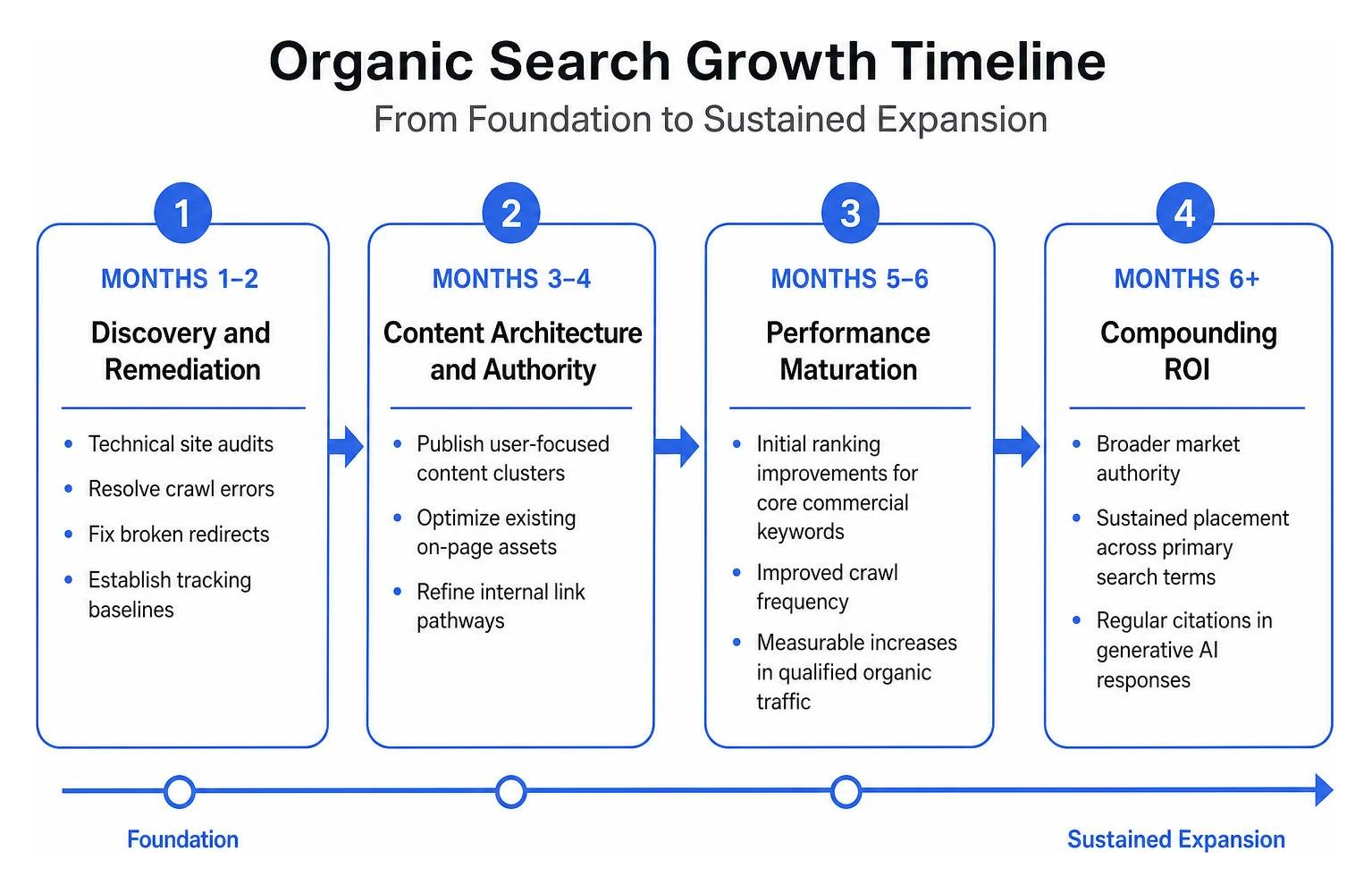
- Months 1–2: Discovery and Remediation. Technical site audits, resolving crawl errors, fixing broken redirects, and establishing tracking baselines.
- Months 3–4: Content Architecture and Authority. Publishing user-focused content clusters, optimizing existing on-page assets, and refining internal link pathways.
- Months 5–6: Performance Maturation. Initial ranking improvements for core commercial keywords, improved crawl frequency, and measurable increases in qualified organic traffic.
- Months 6+: Compounding ROI. Broader market authority, sustained placement across primary search terms, and regular citations in generative AI responses.
Safe Onboarding and Search Console Access Control
Data security should be a top priority during agency onboarding. When beginning discovery audits with a new provider:
- Grant Read-Only Access: Provide read-only access to Google Search Console, Bing Webmaster Tools, and Google Analytics.
- Never Share Master Passwords: Use delegated user permissions within your CMS or hosting control panel rather than sharing primary administrative credentials.
- Review Technical Changes: Ensure all staging edits, script installations, and server-side redirects are documented and tested prior to live deployment.
Frequently Asked Questions About SEO Agencies
Can an SEO agency guarantee top rankings?
No reputable agency can guarantee a #1 ranking or specific position on search engines. Algorithms utilize hundreds of complex, real-time variables, user intent signals, and competitive dynamics that change constantly. Search engines explicitly warn webmasters against vendors claiming guaranteed positions or special priority submission relationships.
How long does it take to see measurable SEO results?
Most healthy organic campaigns begin showing measurable improvements in organic impressions and target keyword positioning within 3 to 6 months. Substantial revenue impact, conversion growth, and category authority typically compound over 6 to 12 months of consistent technical and content execution.
What level of access should an agency receive for an audit?
For an initial discovery audit, an agency only needs read-only (viewer) access to Google Search Console and web analytics platforms. You should never grant write access or administrative credentials to your live server or content management system until a formal, vetted partnership is in place.
Conclusion: Partnering for Sustainable Digital Growth
Selecting the right partner transforms search optimization from an unpredictable expense into a high-yield revenue engine. By focusing on white hat integrity, rigorous technical standards, transparent communication, and data-driven ROI, your business can build an enduring competitive advantage in organic search results.
At SEO Maven, we are a boutique digital marketing agency based in South Florida, serving businesses in Miami FL, Fort Lauderdale FL, Hollywood FL, Aventura FL, and across the US. We specialize in custom search engine optimization, content marketing, high-performance web design, and digital consulting designed to maximize your ROI.
Ready to elevate your organic search visibility and outpace your competition? Contact Us today to schedule a consultation with our team.